How to Fit a TV and Seating Into a Small Living Room
designing a small living room around a TV often feels like a frustrating game of Tetris. You want a comfortable sofa, but you also need a walkway. You want an immersive screen, but you don’t want it dominating the room. You want to seat guests, but you don’t want to feel like you’re sitting on top of them.
The secret to making it work isn’t buying tiny, uncomfortable furniture or giving up on your movie nights. It’s about mastering scale, sightlines, and strategic placement.
Here is your practical, designer-approved guide to nailing the layout in a compact space.
Phase 1: The Reality Check (Measure Before You Move)
Before you buy a single piece of furniture or push your current sofa an inch, you need to map the room. Guessing is how you end up with a coffee table you have to shimmy past every single day.
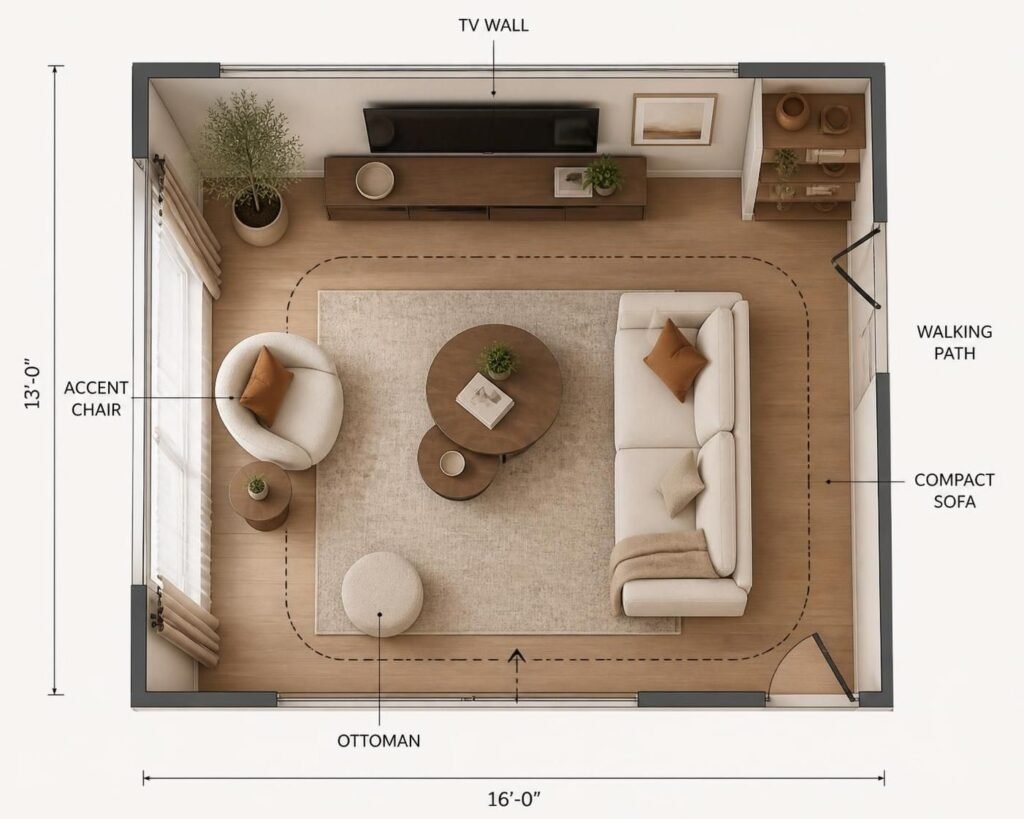
- Map the “Desire Paths”: Identify where you naturally walk. Main walkways need to be at least 30 to 36 inches wide. If you have to turn sideways to get past the sofa, the layout is failing.
- Measure the Viewing Distance: Measure from where your eyeball will be on the sofa to the TV screen.
- The TV Size Rule: The old advice of “buy the biggest TV you can fit” is dead. For a comfortable viewing experience, your distance to the screen should be roughly 1.5 to 2.5 times the TV’s diagonal size. In a small room, wall-mounting the TV is often more important than downsizing the screen.
Phase 2: Choose Your Anchor (TV vs. Architecture)
In a tiny room, you can’t design for everything at once. You have to pick your primary anchor. Trying to give equal priority to the TV, the window, and the fireplace usually results in a room where nothing feels intentional.
- Anchor A: The TV. Best if you have one solid wall without glaring windows. The sofa goes directly opposite. It’s classic, it’s easy, and it works for 90% of small apartments.
- Anchor B: The Architecture/Seating. Best if your room has a gorgeous fireplace, a great window view, or an awkward shape. The seating faces the architectural focal point, and the TV is placed off to the side, often on a swivel mount.
Phase 3: Scale is Everything (Ditch the “Showroom” Furniture)
The biggest mistake in small living rooms is buying full-size furniture meant for sprawling suburban homes. You need “apartment-scale” pieces that sit lighter visually.
- The Sofa: Swap a massive 90-inch sofa for a loveseat (60-72 inches) or a compact apartment-sized sofa. Pro tip: Look for slim arms; thick, rolled arms eat up precious seating space without adding comfort.
- The Chairs: Instead of a bulky sectional that traps people in the corner, try two slim accent chairs (like slipper chairs) paired with the sofa.
- The Secret Weapon: Add seating with movable pieces. A pair of stylish, low-profile ottomans or stools can be pulled out when guests arrive and tucked away under a console when you need floor space.
Phase 4: Make the TV Placement Work Harder
In a small room, your TV setup needs to earn its keep. It shouldn’t just sit there; it should actively make the room feel bigger.
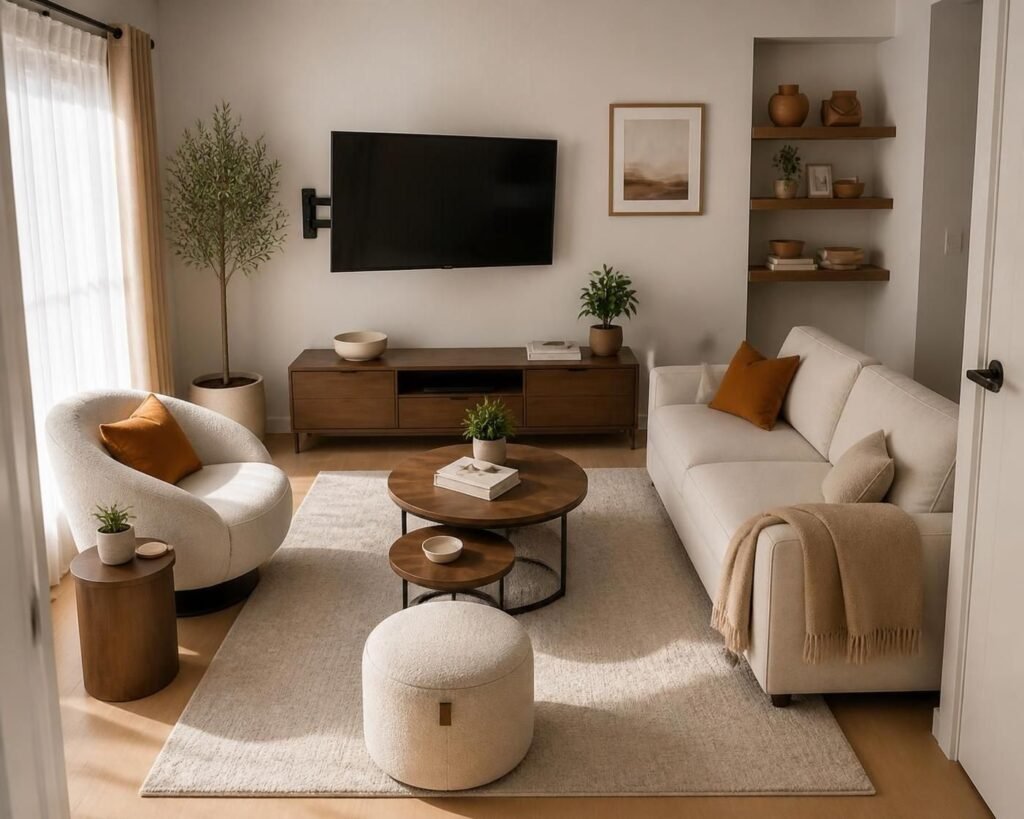
- Mount It: Wall-mounting the TV is the ultimate space-saver. It frees up floor space, allows you to use a much narrower media console, and keeps walkways completely clear.
- Ditch the Massive Entertainment Center: A giant, dark TV unit will make the room feel heavy and closed in. Opt for a low, slim console, or even a floating shelf.
- Use the Right Mount: Use a fixed mount if the TV faces the sofa directly for a clean look. Use a full-motion (swivel) mount if you have an awkward room layout where people might be sitting at an angle or eating at a nearby dining table.
Phase 5: Three Bulletproof Layouts for Tight Spaces
Don’t overcomplicate it. Here are three layouts that actually work in the real world:
1. The “Straight Shot” (Best for simple rectangles)
TV on one wall, sofa directly opposite, maybe one slim accent chair in the corner. Simple, clean, and highly functional.
2. The “Conversational L” (Best for adding seating)
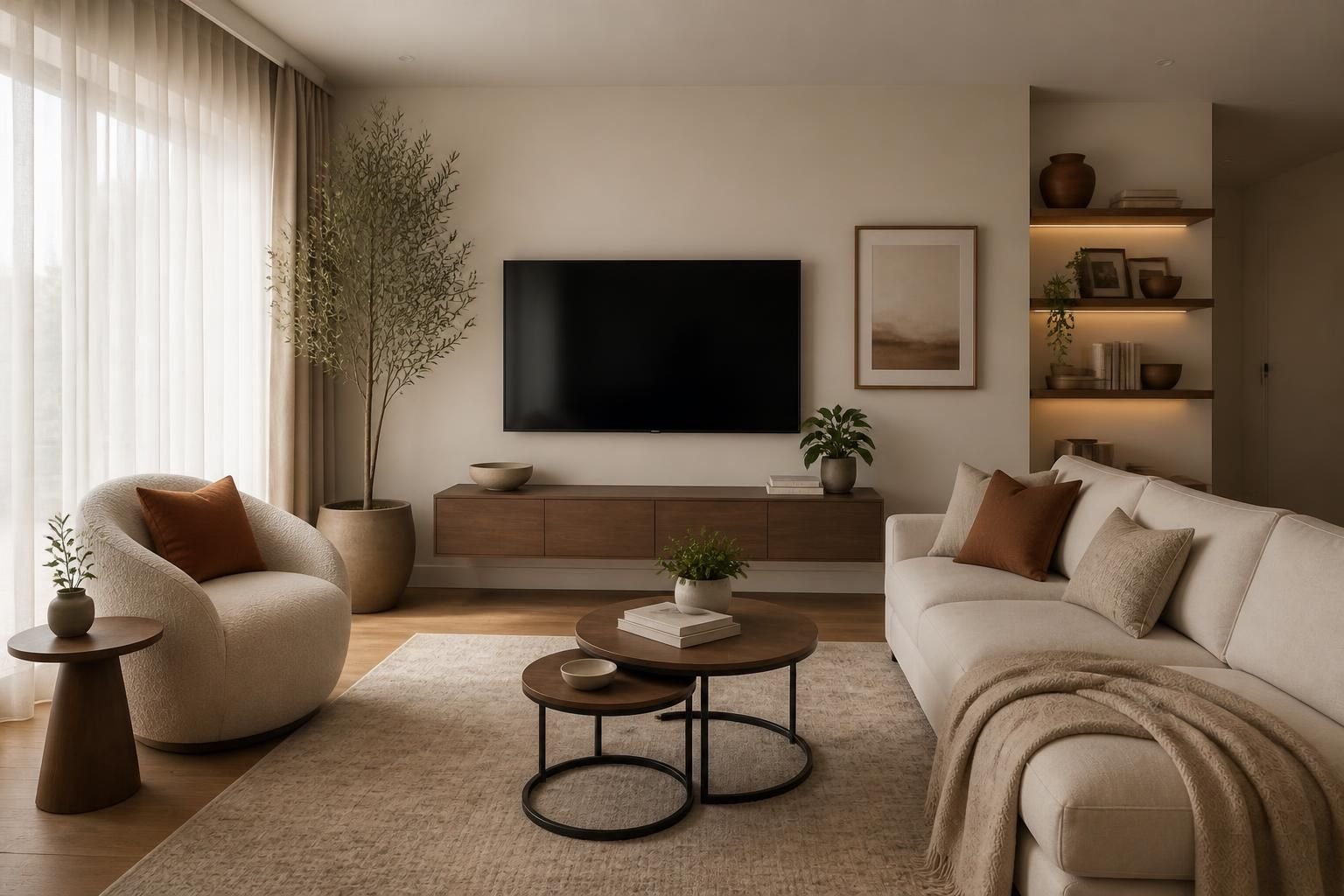
Sofa faces the TV. One accent chair is angled toward the sofa (not necessarily the TV) to create a conversation zone. Use a small ottoman or nesting tables in the middle instead of a bulky coffee table.
3. The “Floating Sofa” (Best for awkward traffic flow)
TV on the wall, but the sofa is pulled a few inches off the wall—or even floated in the middle of the room to create a walkway behind it. Designer trick: Angling a chair slightly breaks up the “everything shoved against the walls” look and makes the room feel dynamic and spacious.
Phase 6: Tame the Visual Noise
Small rooms punish visual clutter. If your space is tight, a rat’s nest of cables and scattered remotes will make the room feel chaotic, no matter how good the layout is.
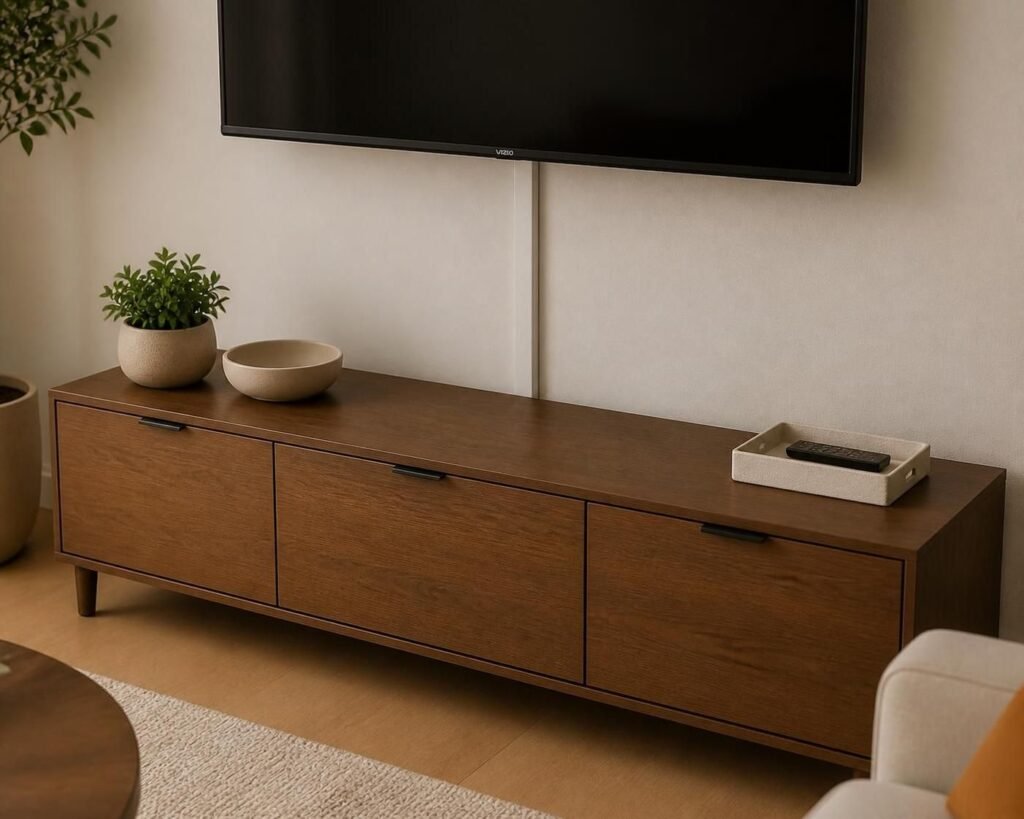
- Hide the Wires: Use paintable cable raceways to hide cords running down the wall, or invest in an in-wall cable kit.
- Close the Storage: Choose a media console with doors or drawers to hide routers, game consoles, and messy cables.
- Corral the Soft Goods: Use one large, beautiful basket for throws and blankets instead of draping them over every chair.
The Quick Planning Cheat Sheet
| Room / Viewing Distance | TV Size That Feels Right | Best TV Setup | Seating That Fits Well | Layout Notes |
|---|---|---|---|---|
| 5–7 ft (Very Close) | 32″–43″ | Wall-mounted or ultra-slim console | Loveseat + 1 compact chair | Prioritize open walkway; consider a swivel mount. |
| 7–9 ft (Standard Small) | 43″–55″ | Wall-mounted + low console | Apartment sofa (72–84″) + ottoman | Angle the chair; use nesting tables instead of a big coffee table. |
| 9–11 ft (Large Small) | 55″–65″ | Wall-mounted + cable management | Sofa + 1 chair or small L-sectional | Keep the console narrow; avoid chunky recliners. |
| Narrow Room (Hallway-style) | 43″–65″ | Full-motion mount is best | Sofa on long wall + armless chair | Float the sofa if a passage must run behind it. |
The Final “Live-In” Checklist
Before you declare victory and hang the art, run through this reality check:
- The Shimmy Test: Can you walk from the entrance to the kitchen without turning sideways or sucking in your stomach?
- The Neck Test: Can you watch the TV from the main seat without craning your neck?
- The Clutter Test: Is there a designated spot for the remotes, chargers, and throws that isn’t the floor or the coffee table?
- The Scale Test: Does one piece of furniture feel like it’s suffocating the room? (If yes, that’s usually the one you need to replace).
A small living room can absolutely handle a great TV setup and comfortable seating. You just need the right scale, smart mounting, and a layout that respects how you actually live.