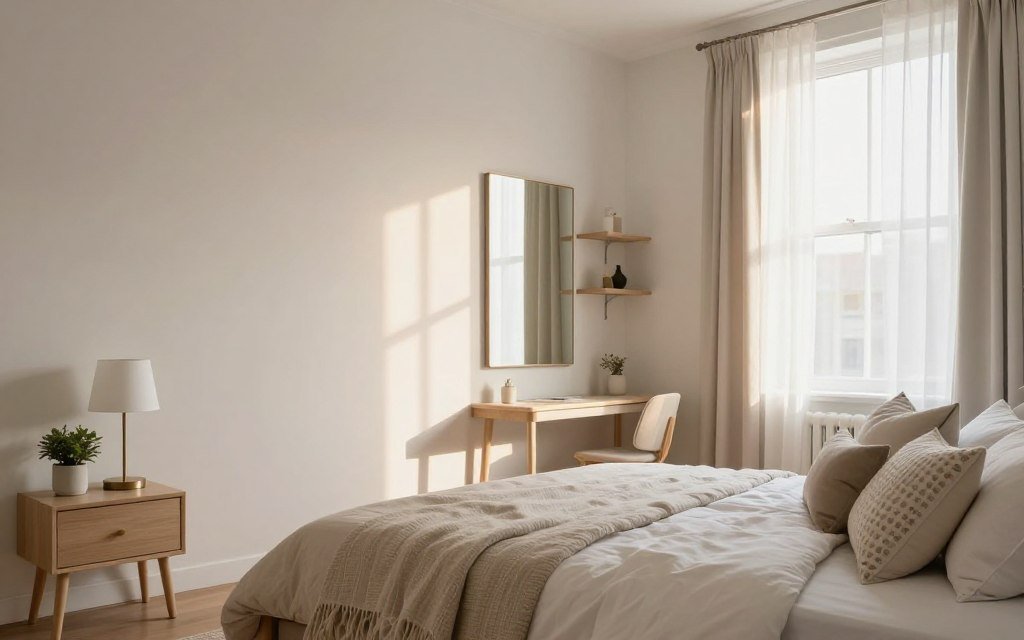
How to Make a Small Bedroom Functional Without Making It Feel Crowded
Let’s be honest: there is nothing relaxing about a bedroom where you have to perform a daily obstacle course just to get from the bed to the closet. You know the feeling waking up and immediately stubbing your toe on a dresser, or staring at that one chair in the corner that has officially become the “clothes mountain”
We tend to blame the square footage. But here is the secret interior designers know: a small bedroom doesn’t have to feel small. The problem usually isn’t the physical size of the room,it’s the visual weight of the furniture, blocked pathways, and a lack of strategic layout.
If you are ready to stop fighting your space and start actually relaxing in it, here is exactly how to transform your cramped bedroom into a functional, breathable sanctuary.
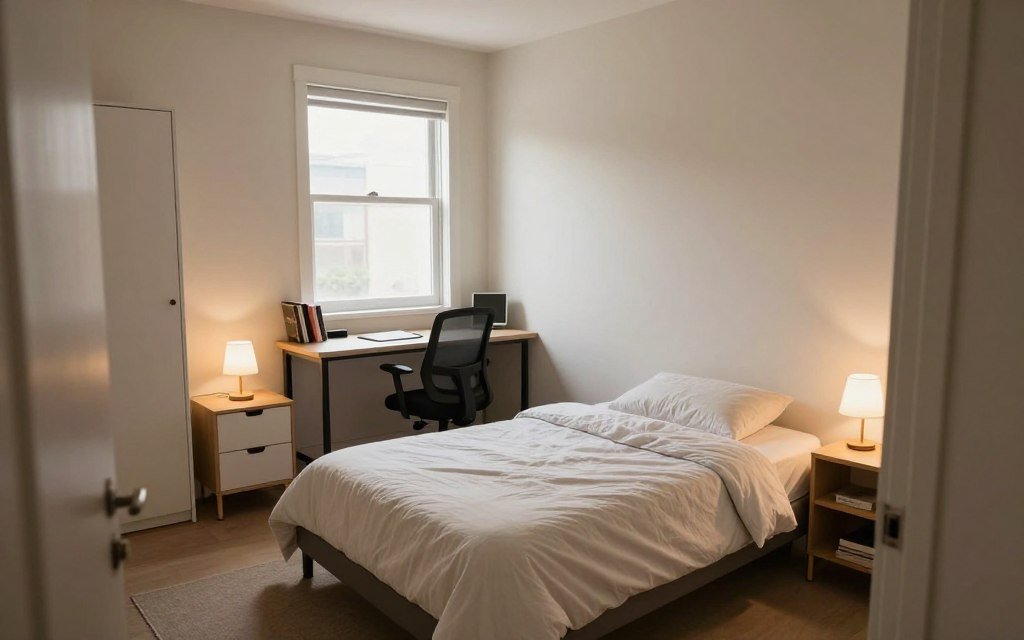
Phase 1: The Reality Check (Before You Move a Single Thing)
The biggest mistake people make is rushing to buy “small” furniture or shoving their current bed against a wall without a plan. Before you lift a finger, you need to understand your space.
The “Painter’s Tape” Trick
Don’t just trust a piece of paper with measurements on it. Grab a roll of blue painter’s tape and map out the furniture directly on your floor.
- The Golden Rule of Walkways: You need 24 to 30 inches (60 to 75 cm) of clear walking space around the bed and the door.
- The Test: Walk through your taped layout. If you find yourself turning sideways to get to the closet, or if the tape blocks the closet door from opening fully, your layout needs to change before you spend a dime.
The Brutal Audit
Small rooms do not have the luxury of holding items “just in case.” Look at your room and ask: Does this item actually need to live in the bedroom?
If you have a bulky desk that you only use for two hours a week, move it to a corner of the living room. Reclaiming that floor space will do more for your bedroom than any decor trick ever could.
Phase 2: Taming the Elephant in the Room (The Bed)
The bed is the undisputed king of the bedroom. Because it takes up so much physical and visual space, choosing the wrong one will instantly make the room feel suffocating.
Downsize the Frame, Not Just the Mattress
If you are sleeping alone, or if the room is exceptionally tight, consider stepping down from a King to a Queen, or a Queen to a Full. But more importantly, look at the frame.
- Ditch the bulk: Avoid massive, tufted headboards and heavy footboards. They act like visual stop-signs.
- Show the floor: Choose a platform bed or a frame with exposed, slender legs. When your eye can see the floor continuing underneath the bed, your brain registers the room as larger and airier.
- Storage is your friend: If you lack closet space, a bed with built-in shallow drawers is a lifesaver. Just ensure the drawers can open fully without hitting a wall.
The “Float” Technique
It is tempting to shove the bed flush against the wall to save space. But if your room allows it, pull the bed just 4 to 6 inches (10 to 15 cm) away from the wall. This tiny gap creates a shadow line that adds depth, makes the bed look like a deliberate centerpiece, and stops you from scuffing the paint with your headboard.
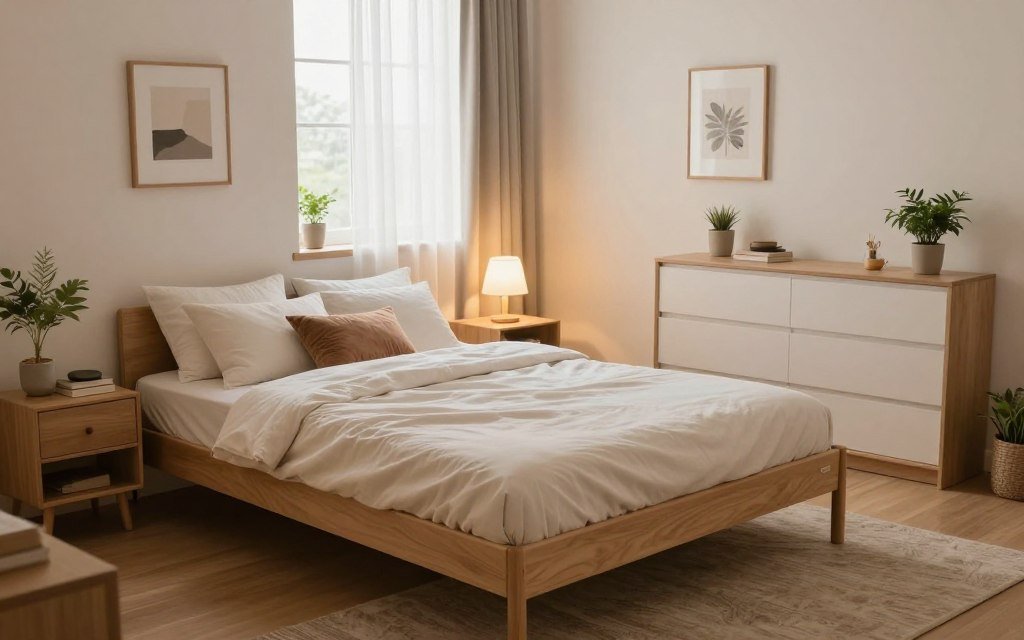
Phase 3: Building “Invisible” Storage
In a small room, storage shouldn’t look like storage. It should blend in, hide away, and keep your surfaces completely clear.
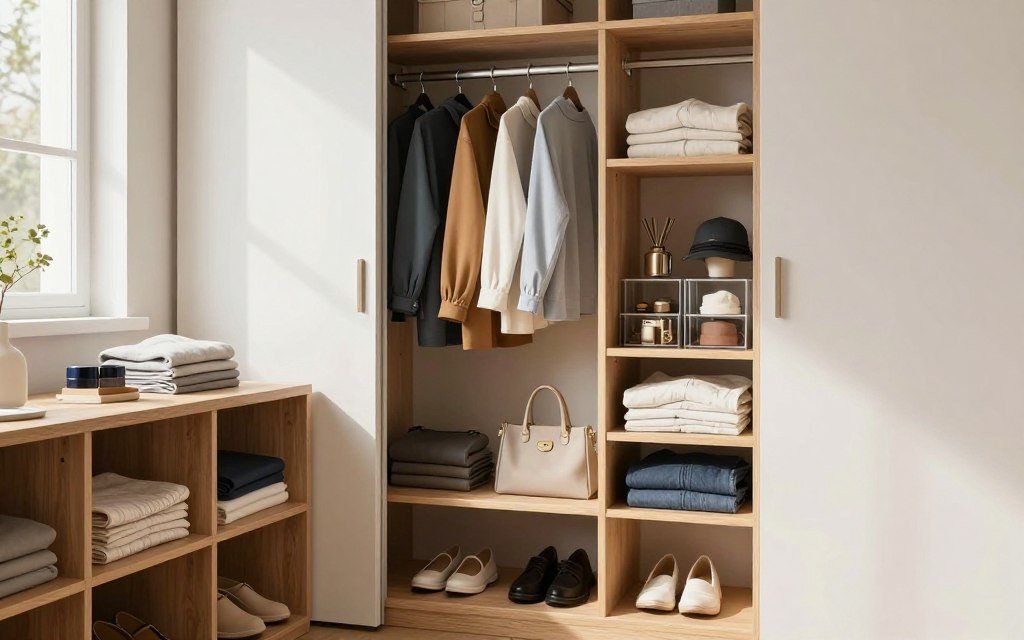
The Closet Overhaul
Before you buy a single plastic bin, edit your clothes. If you haven’t worn it in a year, it’s taking up valuable real estate. Once you’ve purged, upgrade your system:
- Switch to slim velvet hangers: This instantly doubles your hanging capacity.
- Use the “dead” space: Install a second hanging rod for shorter items (like shirts), and use the floor space beneath for shallow drawers. Don’t forget the back of the closet door for shoes or bags.
Go Vertical, Not Horizontal
When you lack floor space, look up. A tall, narrow bookcase takes up the same footprint as a short, wide dresser but holds significantly more.
- Floating shelves above the bed or desk keep items accessible without eating up floor space.
- The Point-of-Use Rule: Store items exactly where you use them. Keep daily skincare in the bathroom or on a bedside tray, not scattered across the bedroom floor.
Tame the Nightstand
Your nightstand should not be a dumping ground for mail, half-empty water glasses, and tangled cords. Keep it strictly to the essentials: a lamp, a book, and a phone charger. Use a small tray to corral jewelry or watches, and hide everything else in the drawer.
Phase 4: Designing the Illusion (Light, Color, and Decor)
How a room feels is heavily dictated by how it looks. You can trick the eye into seeing a larger, calmer space with a few deliberate design choices.
Kill the “Boob Light”
Relying on a single, harsh overhead ceiling light casts shadows in the corners, making the room feel like a cave.
- Layer your lighting: Add a warm bedside lamp and a small accent light.
- Free up surface space: Install wall sconces or use clip-on reading lights. This keeps your nightstand completely clear and draws the eye upward, emphasizing the height of the room.
The Power of Monochromatic and Low-Contrast
You don’t have to paint everything stark white, but high-contrast colors chop a small room into visual fragments. Stick to a cohesive, low-contrast color palette for your walls, bedding, and large furniture. When the eye doesn’t have to constantly adjust to different colors, the space feels continuous and expansive.
Decor: One Big Statement > Ten Tiny Ones
A gallery wall of 15 tiny frames in a small bedroom looks like visual clutter. Instead, hang one large piece of art above the bed or dresser. It acts as a focal point, grounds the space, and makes the wall feel intentionally designed rather than haphazardly decorated.
Mirrors (Used Correctly)
A large mirror leaning against the wall or hung opposite a window will bounce natural light around the room and double the visual depth. Just make sure it’s reflecting something beautiful (like a window or a clean wall), not the inside of your open closet.
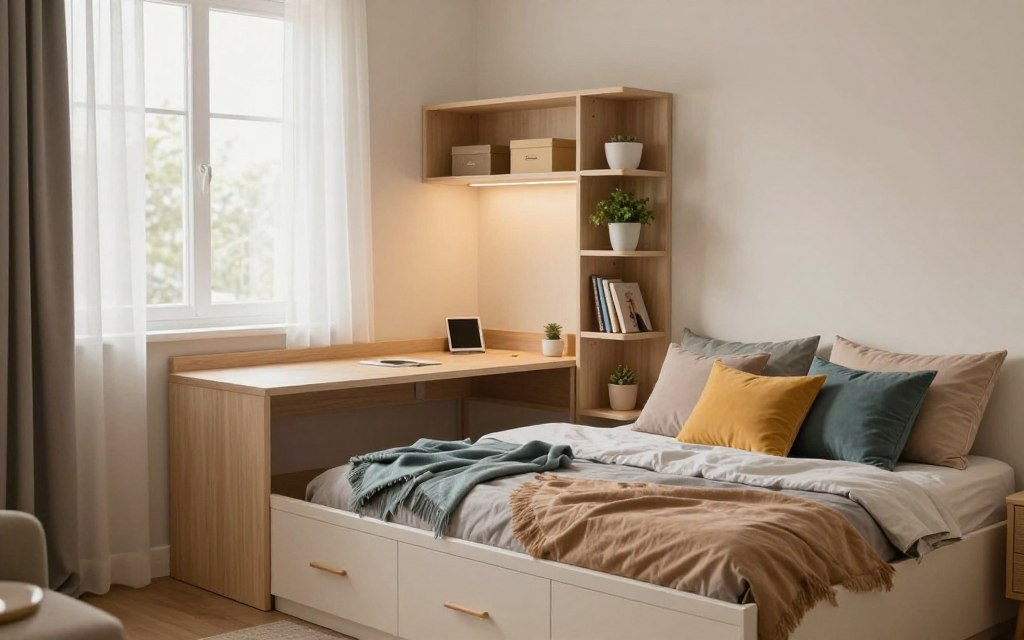
Phase 5: The 5-Minute Daily Reset
A small room has zero margin for error when it comes to clutter. If things pile up for just two days, the room feels chaotic. The secret to maintaining a small bedroom isn’t a massive weekend cleaning session, it’s a micro-habit.
The Daily Reset:
Every morning, before you leave the room, take exactly five minutes to:
- Make the bed (this instantly clears 50% of the visual space).
- Put all clothes in the hamper or closet (banish the “clothes chair”).
- Clear the nightstand and dresser surfaces.
When your surfaces are clear, your mind is clear. A small bedroom only feels like a sanctuary when it is maintained as one.
The Bottom Line
A small bedroom isn’t a punishment, it’s an opportunity to curate a space that is deeply personal, incredibly cozy, and highly functional.
Stop trying to force large, bulky furniture into a petite space. Embrace the scale of your room, choose pieces with slender legs and light visual weight, and ruthlessly edit your belongings. When you stop fighting the square footage and start designing for it, you’ll finally be able to walk into your bedroom, close the door, and actually breathe