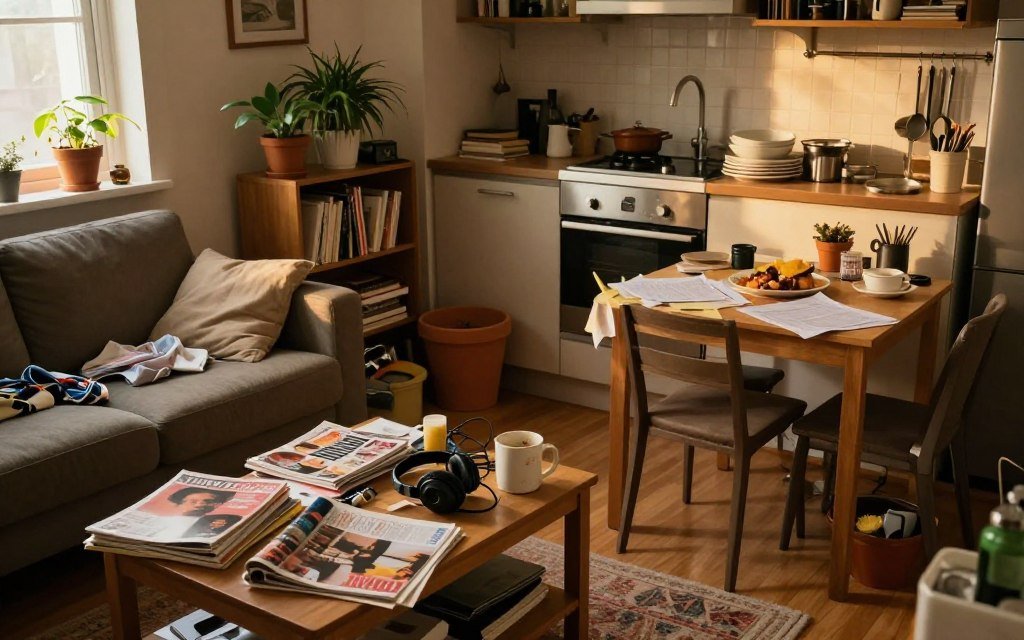
Why Small Apartments Feel Cluttered So Quickly
You know the feeling. You walk through the door after a long day, drop your keys on the counter, and immediately feel your shoulders tense up. Your apartment feels cramped, chaotic, and somehow smaller than it was this morning. You didn’t even buy anything new today, so why does it look like a tornado hit?
Let’s be real: living in a small space is basically playing life on hard mode.
When you don’t have a spare guest room or a sprawling basement to shove things into, every single object demands your attention. But here’s the good news: a small apartment doesn’t have to feel like a storage unit. It just requires a different strategy.
Here is exactly why your space feels cluttered so fast, and a realistic, 7-step plan to take it back.
The Reality Check: Why Small Spaces Fail
Before we start buying clear plastic bins, we need to understand the actual problem. It’s not a personal failure; it’s just math and architecture.
1. The Item-to-Space Ratio is Working Against You
In a 2,000-square-foot house, a stray pair of shoes is just a stray pair of shoes. In a 500-square-foot apartment, those same shoes take up 2% of your living room’s visual real estate. Small spaces magnify everything.
2. You Have No “Buffer Zones”
Bigger homes have “buffer zones”—closets, attics, guest rooms—where clutter goes to hide. You don’t have that luxury. Your living room is your living room, your office, your gym, and your storage. When there is nowhere to hide the mess, the mess becomes your entire environment.
3. Visual Noise Causes Actual Stress
When your eye has nowhere to rest, your brain stays in a low-grade state of alert. That’s why you feel exhausted just sitting on your couch. Clutter isn’t just a physical problem; it’s a mental drain.
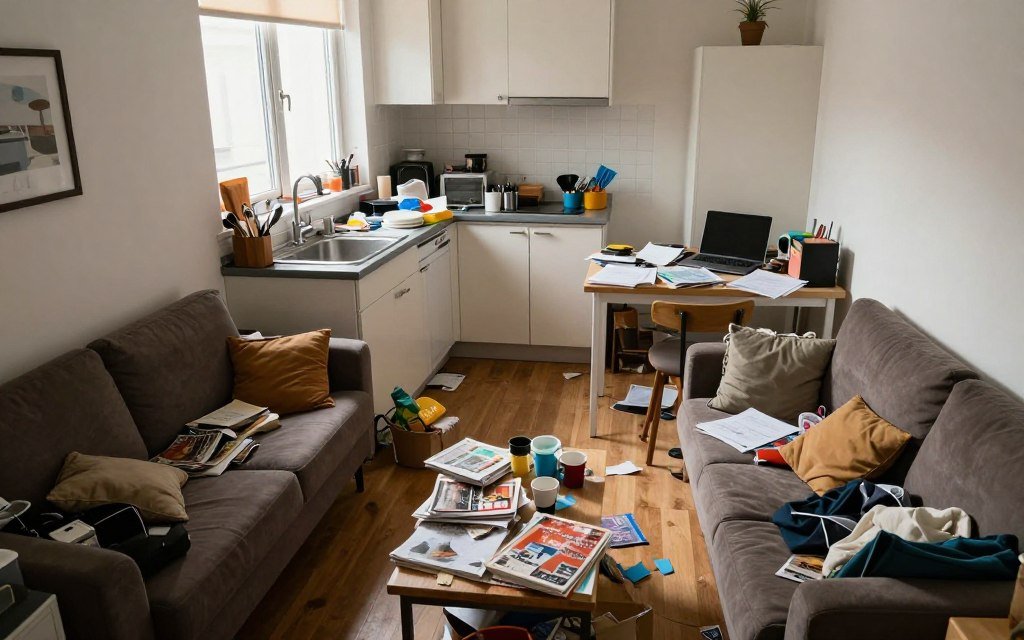
1: Stop Buying Bins and Start Tracking
The biggest mistake people make is trying to organize clutter. You can’t organize things you don’t need. Before you do anything, you need to audit your space.
- Find your “Landing Strips”: Walk into your apartment and look at the flat surfaces. The kitchen island, the entryway console, the coffee table. These are your landing strips. Whatever piles up here daily is your actual routine, not the routine you wish you had.
- The 7-Day Clutter Log: For one week, don’t clean. Just observe. Notice what you take out and leave on the counter. If your mail always ends up on the dining table, your dining table is your mail station. Accept it, and then fix it.
2: Design for Your Actual Self, Not Your Aspirational Self
This is where most people get stuck. We hold onto things for the person we want to be, rather than the person we actually are.
- Be brutally honest: You don’t need a dedicated tea station if you only drink coffee. You don’t need to keep the bread maker if you haven’t baked bread since 2022.
- Assign a home based on reality: If you always take off your watch and put it on the bathroom sink, then the bathroom sink (or a small tray next to it) is its home. Don’t force it into a bedroom drawer just because “watches belong in the bedroom.” Proximity is the secret to a tidy home.
3: Plug the Leaks (Stop the Inflow)
You can’t bail water out of a sinking boat if you don’t plug the hole. You have to stop new clutter from entering.
- The 48-Hour Rule: See something you want to buy for your apartment? Wait 48 hours. If you still genuinely need it in two days, buy it. 90% of the time, the urge passes.
- One In, One Out: If you buy a new winter coat, an old one must be donated. If you buy a new mug, an old one goes. This keeps your inventory strictly capped.
- Free Stuff Isn’t Free: Conference swag, free samples, hand-me-downs that don’t fit your style. They cost you square footage. Say no, or recycle them immediately.
4: The “Purgatory” Decluttering Method
Decluttering by category (pulling all your shirts from every closet at once) is highly effective, but it can be emotionally exhausting. Here is a more human way to do it:
- Gather and Sort: Pull everything out. Sort them into Keep, Donate, and Trash.
- Create a “Maybe” Box: This is the secret weapon. For items you are deeply torn about, put them in a box, tape it shut, and write the date on it. Put it out of sight. If you haven’t opened the box in six months to get something, donate the whole box without opening it. You clearly didn’t need it.
- Remove it immediately: Don’t let the donation bags sit in your hallway for a month. That just creates new clutter. Drive to the charity shop on your way home.
5: Design Storage for “Lazy” People
If putting something away takes more than two steps, you won’t do it. It’s human nature. We optimize for convenience.
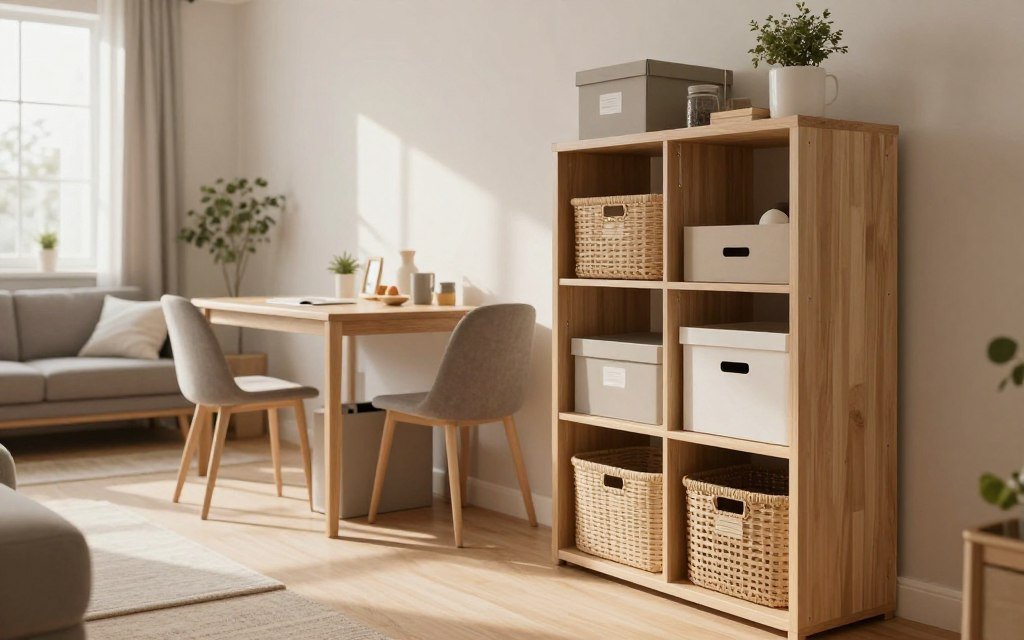
- Ditch the lids: If your everyday items are in bins with snap-on lids, they will end up on the floor. Use open baskets, trays, and hooks for high-use items.
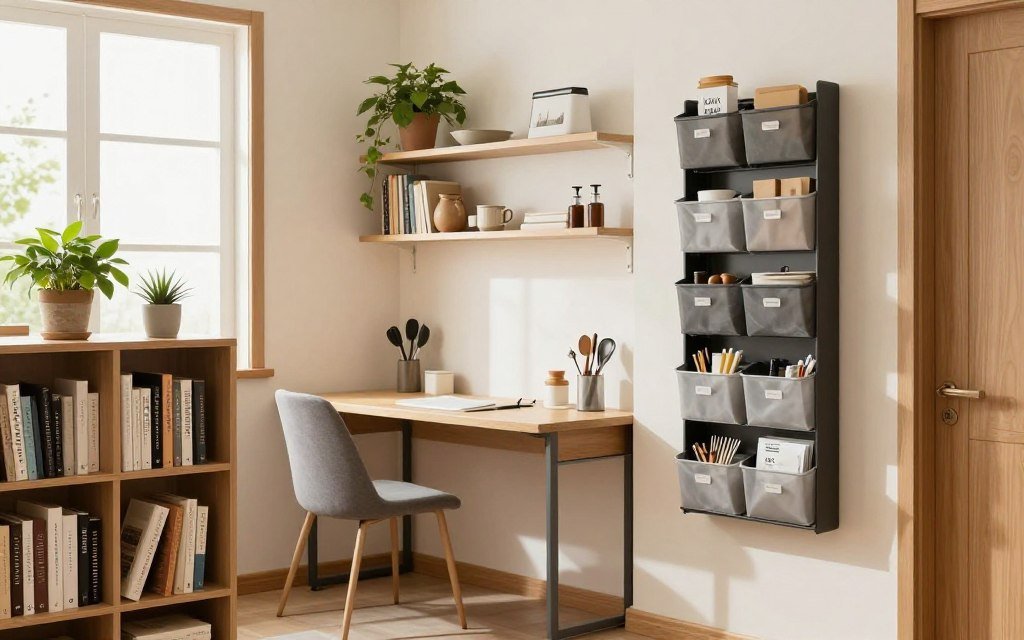
- Vertical is your best friend: When you can’t build out, build up. Use the space above your toilet, the back of your doors, and the walls above your desk.
- Hide the ugly, show the pretty: Use closed cabinets for visually noisy things (cleaning supplies, papers, cables). Use open shelves for things that look good (cookbooks, a nice plant, your coffee maker).
6: The 10-Minute Nightly Reset
You don’t need to spend your entire Saturday scrubbing and organizing. You just need a daily reset to keep the momentum going.
- Set a timer for 10 minutes: Put on a podcast or your favorite playlist.
- Reset the rooms: Put the throw blankets back on the couch. Load the dishwasher and wipe the counters. Put the shoes back in the rack. Clear the coffee table.
- The “One Touch” Rule: When you walk into your apartment, don’t drop your coat on the chair. Hang it up immediately. When you finish a task, put the items away right then. It takes seconds, but it saves hours.
7: Maintain the Peace
A small apartment isn’t a one-time project; it’s a lifestyle.
- The Weekly 15-Minute Sweep: Once a week, walk through your space with a trash bag and a donation box. Look for things that have migrated to the wrong rooms.
- Seasonal Rotation: You don’t need your winter coats and summer sandals occupying the same closet at the same time. Use under-bed storage or high shelves to swap out seasonal items. It instantly makes your daily spaces feel twice as big.
The Bottom Line
At the end of the day, your apartment shouldn’t feel like a storage unit. It should feel like home.
Living in a small space means you have to be fiercely protective of what you let in. It’s about curating a space that supports the life you actually live, not the life you think you’re supposed to live. Start with just one surface today. Clear off that kitchen counter. See how much lighter the room feels. Then, take it one step at a time.
Quick FAQ
Why does my apartment look messy even when I just cleaned it?
Because small spaces lack “buffer zones.” In a big house, clutter hides in closets. In your apartment, a single pile of mail on the counter takes up a massive percentage of your visual space.
Should I buy a bunch of storage organizers?
No. Organizing clutter is just hiding the problem. Declutter first. Only buy organizers after you know exactly what you are keeping and what space you have left.
How do I stop my entryway from becoming a dumping ground?
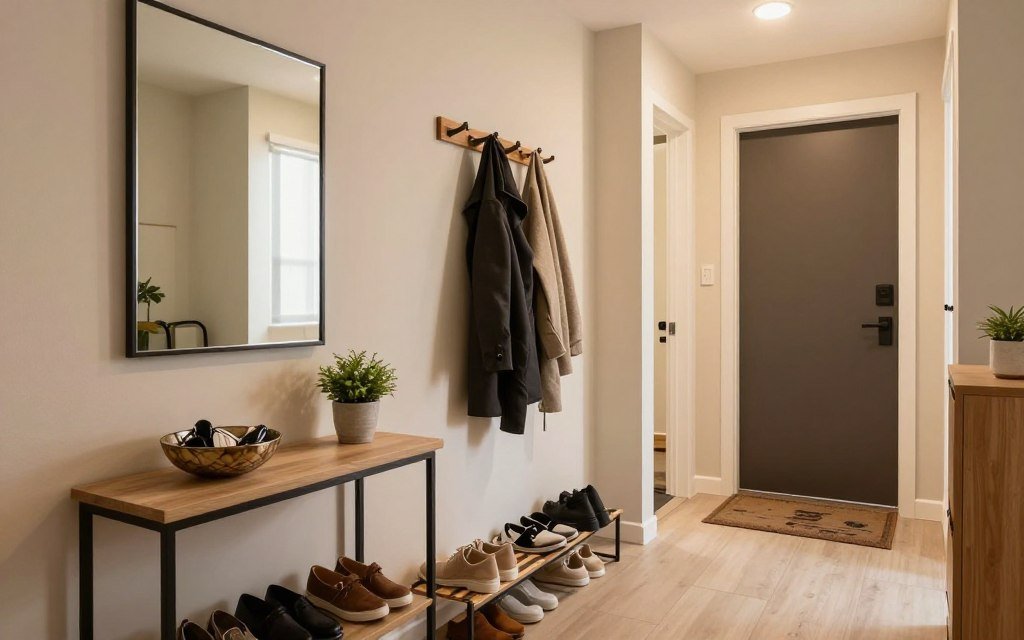
Give every item a specific home right at the door. A hook for coats, a tray for keys, a rack for shoes, and a small recycling bin for mail packaging. If it doesn’t have a home there, it will end up in the living room.
What do I do with sentimental items in a tiny space?
Be realistic. You can’t keep everything. Keep a single, beautifully designed “memory box” for small items. Once the box is full, you can’t add anything else without taking something out. Take photos of larger sentimental items before letting them go.