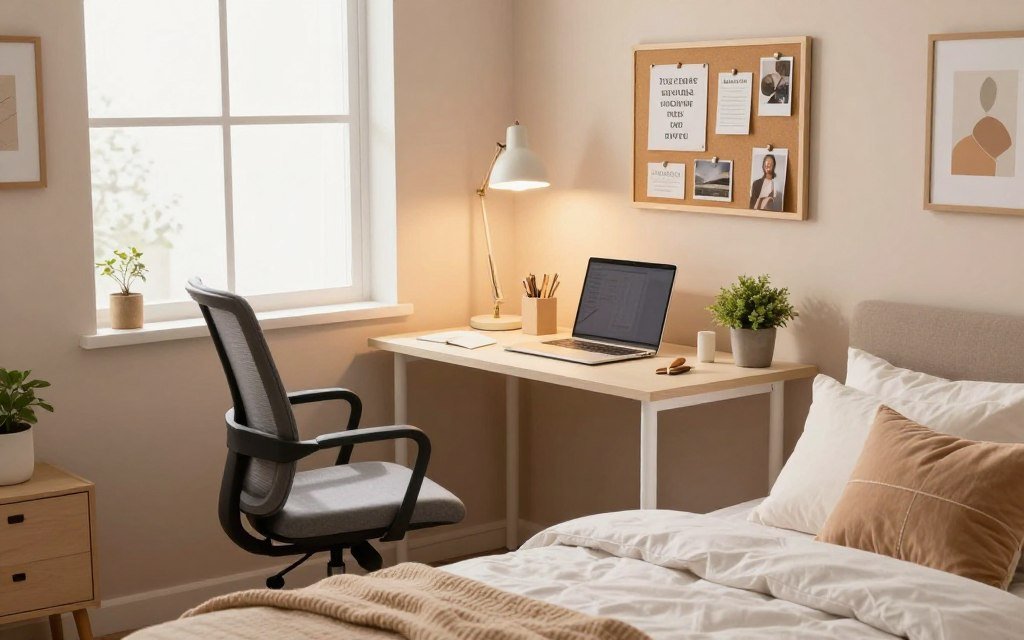
How to Create a Workspace in a Small Bedroom
Let’s be honest: working from your bed sounds like the ultimate comfort until your lower back starts screaming, and you find yourself staring at the ceiling at 2 AM because your brain now associates your mattress with spreadsheets and stressful emails.
When you live in a small space, combining your bedroom and your office isn’t just a design challenge; it’s a psychological one. If you aren’t careful, your sanctuary becomes your stress factory.
But it doesn’t have to be this way. You can absolutely have a highly productive workspace in your bedroom without sacrificing your sleep or your sanity. The secret isn’t just about buying a smaller desk it’s about creating a physical and mental boundary between “work mode” and “rest mode”
Here is how to design a small bedroom workspace that actually works for your life.
1. Master the “Line of Sight” (Layout & Zoning)
Before you drag your desk across the room, you need to think about sightlines. The biggest mistake people make in a bedroom office is positioning their desk so they can see their monitor from their bed. If you can see your work from your pillow, your brain will never fully power down.
- Face a wall, not the bed: If possible, position your desk so you are facing a wall or a window, with your bed behind you or out of your direct peripheral vision.
- Use physical dividers: If your room is too small to turn your back on the bed, use a visual barrier. A tall bookshelf, a folding room divider, or even a heavy curtain can create a psychological “wall” between your work zone and your sleep zone.
- Mind the swing: Don’t just measure the floor; measure the doors. Ensure your closet door, bedroom door, and desk chair don’t create an obstacle course when fully open.
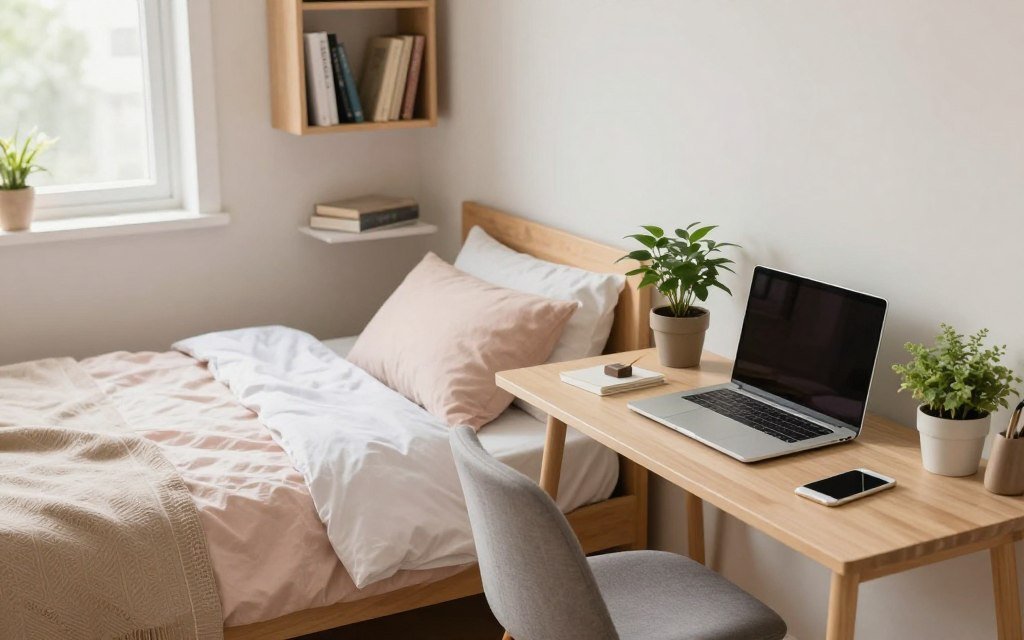
2. Right-Size Your Furniture for the Room
In a small bedroom, a massive, clunky desk will make the room feel suffocating. You need furniture that respects the scale of the space while still supporting your work.
- Ditch the bulky executive desk: Look for slim-profile writing desks, wall-mounted floating desks, or corner desks that utilize “dead space.”
- Consider the “drop-down” option: If your room is incredibly tiny, a wall-mounted drop-leaf desk is a lifesaver. You can fold it flat against the wall when you’re done working, literally erasing the office.
- Scale the chair: Huge, padded gaming or executive chairs will swallow the room. Opt for a sleek, ergonomic task chair with a slim profile and armrests that can tuck completely under the desk.
3. The “Out of Sight” Storage Strategy
When your office is in your bedroom, visual clutter equals mental clutter. If you are surrounded by stacked papers, tangled cords, and office supplies when you try to sleep, your anxiety will spike.
- Build up, not out: Use the wall space above your desk. Install floating shelves or a pegboard to get notebooks, pens, and headphones off the desk surface.
- Hide the ugly: Use closed storage (drawers, cabinets, or stylish fabric bins) for things that look messy like cables, chargers, and paperwork. Keep only the essentials (a lamp, your laptop, a coffee mug) on the actual desktop.
- Tame the cord chaos: Nothing ruins a cozy bedroom vibe faster than a rat’s nest of wires. Use under-desk cable management trays, adhesive cord clips, and velcro ties to keep wires hidden and secure.
4. Protect Your Body and Your Circadian Rhythm
A small workspace can easily become a physical and mental trap if you don’t pay attention to ergonomics and lighting.
- The 90-Degree Rule: Your monitor should be at eye level (use a laptop stand or stack some books if needed). Your elbows should rest at a 90-degree angle, and your feet should be flat on the floor. If your chair doesn’t support this, invest in a cheap footrest and a lumbar pillow.
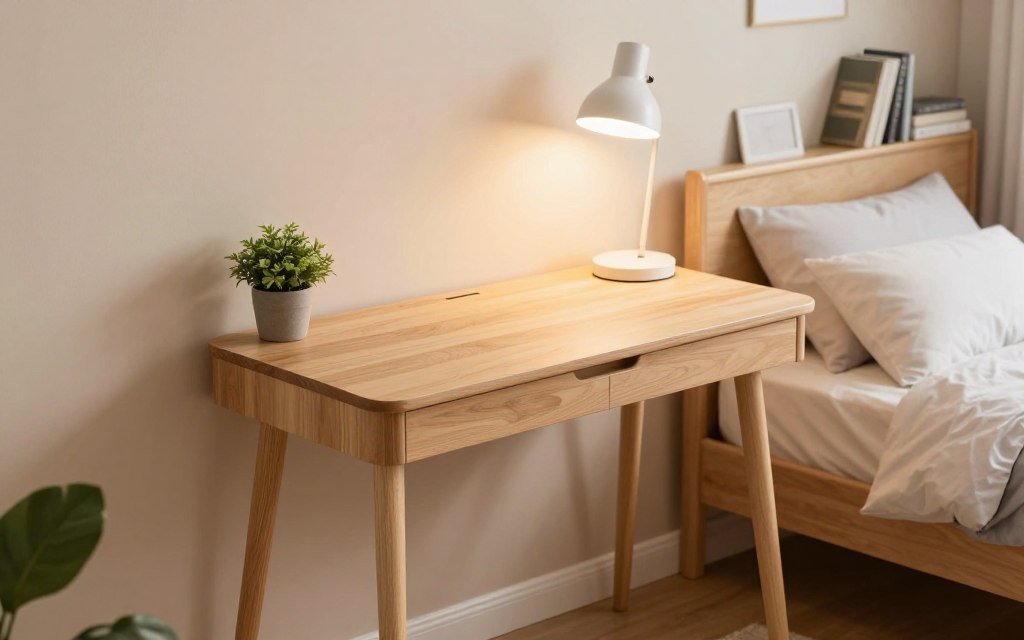
- Layer your lighting: Overhead bedroom lights are usually too dim for working and too harsh for relaxing. Add a dedicated, adjustable task lamp for your desk.
- Warm it up at night: This is crucial. During the day, use bright, cool light to stay focused. But an hour before bed, switch to a warm, dim lamp. This signals to your brain that the workday is over and it’s time to produce melatonin.
5. Soften the Space (Make it Feel Like a Bedroom)
Your workspace shouldn’t look like a sterile corporate cubicle. It needs to feel like it belongs in your home.
- Cohesive styling: Match your desk accessories to your bedroom’s color palette. If your room has warm wood tones and beige linens, don’t bring in a cold, black metal desk and harsh white plastic organizers.
- Bring in life: Add a low-maintenance plant (like a pothos or snake plant) to your desk. It softens the hard lines of tech and furniture and improves the air quality.
- Add a rug: If your flooring is hard, put a small, soft rug under your desk chair. It defines the workspace visually and makes the room feel cozier underfoot.
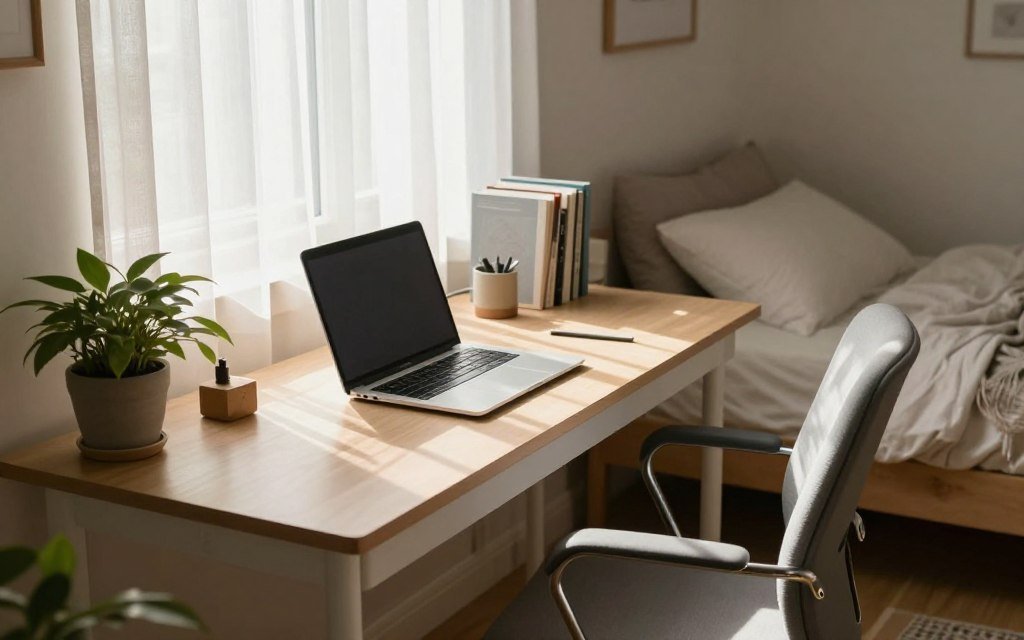
6. The 5-Minute “Shutdown” Ritual
This is the most important step. When your office is in your bedroom, you cannot just “walk away” from work. You have to actively close the office.
Create a 5-minute end-of-day ritual to transition your brain from work to rest:
- Close all tabs and shut the laptop. Put it inside a drawer or cover it with a nice cloth if it stays on the desk.
- Clear the desktop. Put pens in the holder, throw away trash, and stack your notebooks.
- Change the lighting. Turn off the bright task lamp and turn on the soft, warm ambient light.
- Physically reset the room. Fluff your pillows and pull the covers up.
By doing this, you are sending a clear signal to your brain: Work is over. It is time to rest.
Designing a workspace in a small bedroom is about compromise, but it doesn’t mean you have to compromise on your well-being. By being intentional with your layout, hiding the visual noise, and strictly enforcing a “shutdown” routine, you can create a space that helps you crush your goals during the day and get deep, restorative sleep at night.
Your bedroom is your sanctuary. Protect it, even if it has to double as an office.
Quick FAQ
I don’t have room for a desk at all. What are my options?
If floor space is truly zero, look into wall-mounted drop-leaf desks, or repurpose a deep windowsill. Alternatively, use a lap desk while sitting in a supportive chair in the corner of the room, and store the laptop away when done.
How do I stop my work stress from keeping me awake?
The physical “shutdown” ritual is your best defense. Never work from your bed. If you can, face your desk away from the bed. And absolutely enforce a rule: no screens in bed 30 minutes before sleep.
My room gets too hot when I’m working at my desk. How do I fix it?
Small bedrooms trap heat quickly, especially with a running laptop. Ensure your desk isn’t blocking an AC vent. Use a small, quiet USB desk fan to keep air circulating, and opt for breathable chair materials rather than heavy leather or fabric.
Should I use a room divider if my space is really tiny?
Yes, but choose wisely. A solid wall will make a tiny room feel claustrophobic. Opt for an open-back bookshelf (which lets light through but blocks the view of the desk), a slatted wood screen, or a ceiling-mounted curtain track.