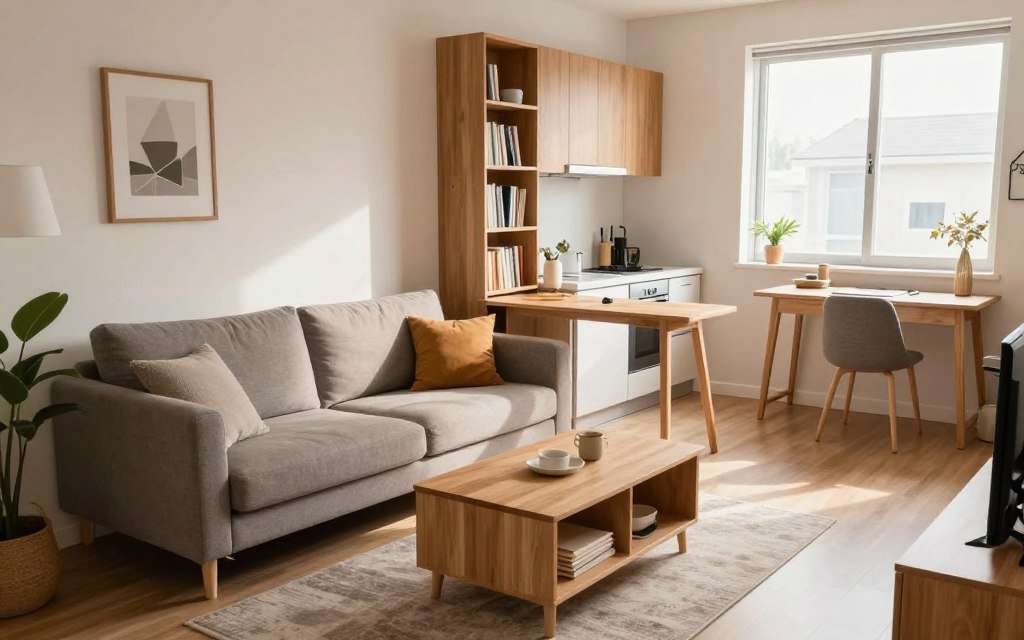
How to Make a Small Apartment More Functional Without Remodeling
Let’s be honest : living in a small rental often feels like playing Tetris on a level you just can’t beat. You’re constantly shifting furniture to open a drawer, tripping over bags in the entryway, and staring at a kitchen counter that’s barely big enough to hold a cutting board.
You don’t need a massive renovation or a landlord’s permission to fix this. You just need to stop treating your apartment like a storage unit and start treating it like a machine.
When you don’t have square footage to spare, every inch has to work twice as hard. Here is exactly how to hack your small apartment’s layout, storage, and daily flow without losing a single dollar of your security deposit.
1: Stop Buying Bins and Track Your “Friction Points”
The biggest mistake people make when their apartment feels cramped is immediately running to the store to buy organizers. You cannot organize your way out of a bad layout. Before you spend a dime, you need to audit how you actually live.
Find the “Friction”
For three days, pay attention to what annoys you. Where do you stub your toe? Where does the mail inevitably pile up? Which cabinet door hits the island when you open it? These are your friction points.
Map the Invisible Zones
You might not have walls to separate your living room, dining area, and bedroom, but you still need “zones”
- Visual Boundaries: Use area rugs to anchor your living space and physically separate it from your sleeping area.
- Sightlines: Never block a window with tall furniture. Keeping your sightlines clear to the glass makes the room feel twice as big.
- The 30-Inch Rule: Always leave at least 30 inches of clearance for walkways and chair pull-outs. If you have to squeeze sideways to get to the bathroom, your layout is failing.
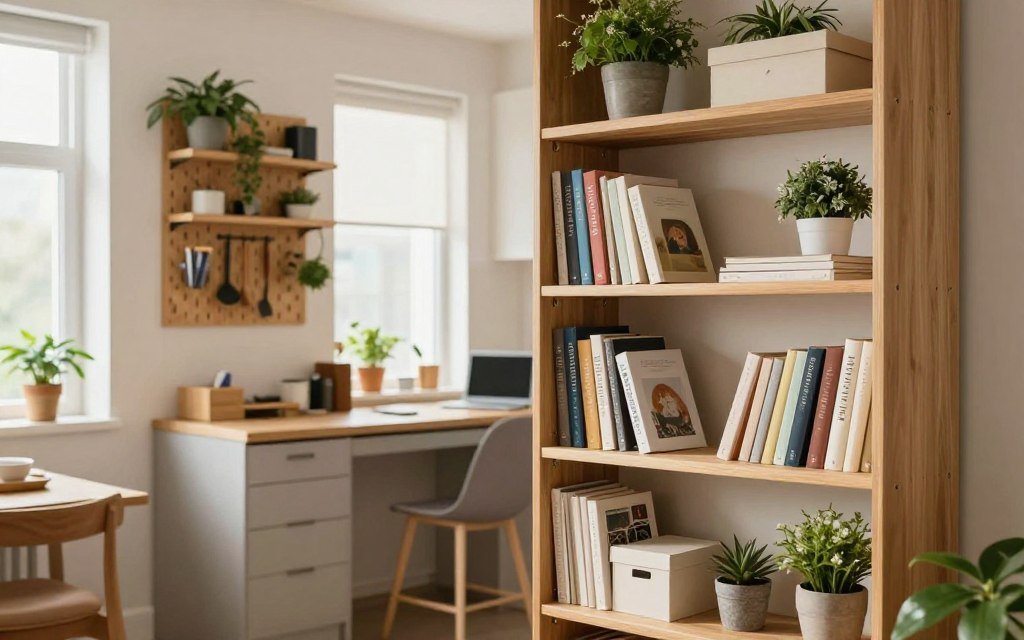
2: Hacking the Vertical and Hidden Space
When you can’t build out, you have to build up, down, and sideways. In a small apartment, the “dead space” is where the magic happens.
Look Up
Install floating shelves above your desk or couch. Use the space above your kitchen cabinets for items you only use once a year. Hang a pegboard in the kitchen or office to get tools and supplies off the counter and onto the wall.
Look Behind Doors
The back of your front door, bathroom door, and closet doors are prime real estate. Use over-the-door organizers for shoes, cleaning supplies, or even a hidden ironing board. Renter hack: If you can’t use over-the-door hooks that damage the trim, use heavy-duty 3M Command hooks.
Look Down
If your bed frame allows it, use low-profile rolling bins underneath. If it doesn’t, buy bed risers to create the space. Just make sure you use bins with wheels or handles; if you have to drag a heavy plastic box out from under the bed, you’ll never use it.
3: Furniture That Earns Its Keep
In a tiny apartment, a piece of furniture that only does one job is a luxury you can’t afford. Everything needs to pull double duty, and it needs to be scaled correctly for the room.
| The “Single-Use” Trap | The “Double-Duty” Upgrade | Why It Works |
|---|---|---|
| Standard Coffee Table | Storage Ottoman or Nesting Tables | Hides blankets/remotes; nesting tables can be tucked away when you need floor space for yoga or guests. |
| Bulky Dining Table | Drop-Leaf or Wall-Mounted Desk/Table | Folds flat against the wall when not in use, literally erasing the furniture. |
| Standard Sofa | Sleeper Sofa or Modular Sectional | Accommodates guests; modular pieces can be rearranged to fit awkward corners. |
Scale is Everything
A massive, overstuffed sofa will swallow a small living room. Look for furniture with exposed legs (it creates the illusion of more floor space) and slim profiles.
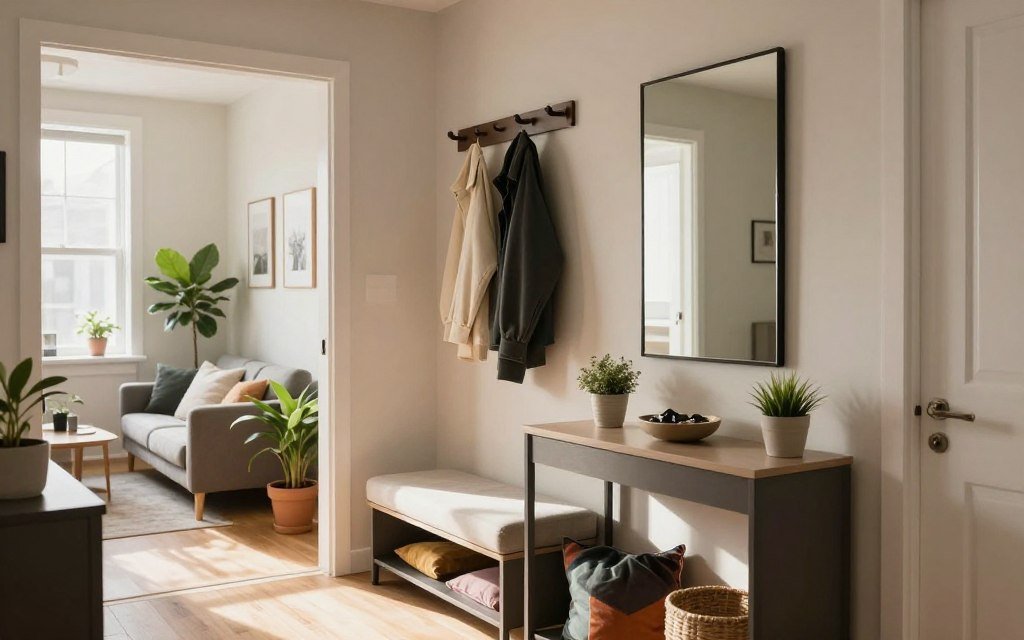
4: Room-by-Room Micro-Optimizations
You don’t need to overhaul your whole life; you just need to tweak how each room functions.
The Kitchen: Expand the Triangle
- Steal Counter Space: Buy an over-the-sink cutting board. It instantly gives you 2 extra feet of prep space.
- Clear the Decks: Get the toaster, blender, and coffee maker off the counter. If you don’t use it daily, it goes in a cabinet or on a high shelf.
- Magnetic Strips: Mount a magnetic knife strip on the backsplash to free up drawer space and keep knives sharp.
The Bedroom: Protect Your Sleep
- Nightstand Alternators: If you don’t have room for a nightstand, use a wall-mounted floating shelf, or hang a stylish fabric “bedside caddy” on the side of your bed for your phone, glasses, and book.
- Closet Hacks: Switch to slim velvet hangers (they instantly double your hanging space). Use the back of the closet door for a hanging shoe organizer or jewelry rack.
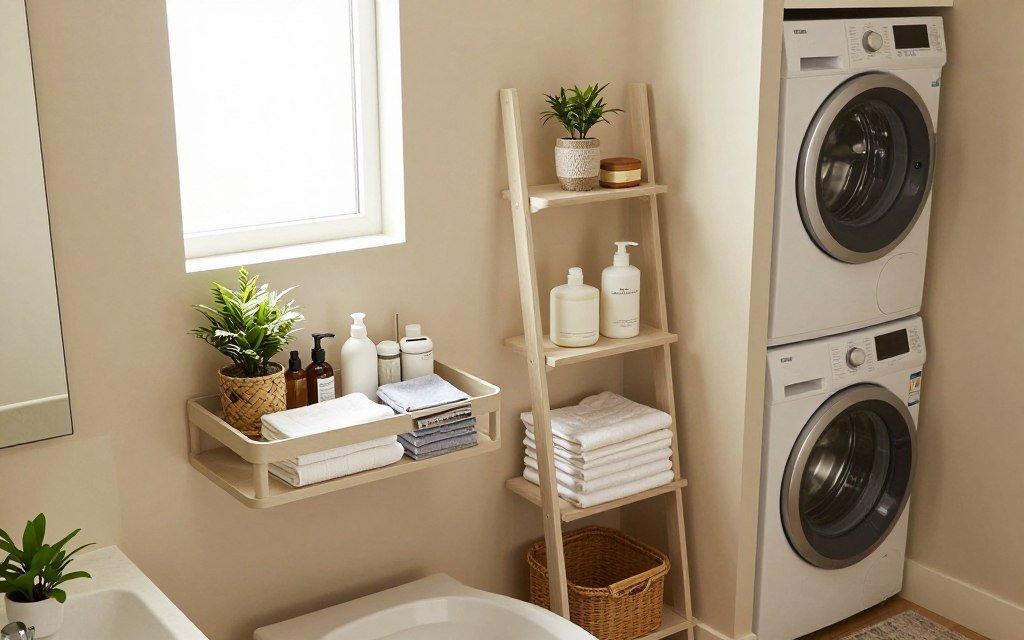
The Bathroom: Go Tension
- Shower Storage: Don’t drill holes. Use a tension-rod corner caddy for your shampoo and soap.
- Roll, Don’t Fold: Roll your towels instead of folding them. You can fit twice as many in a shallow cabinet, and they look like a spa.
5: Renter-Safe Aesthetics & The Daily Reset
A functional apartment shouldn’t feel like a sterile storage unit. It still needs to feel like home.
Lighting is Your Secret Weapon
Overhead “boob lights” are the enemy of small spaces. They cast harsh shadows and make rooms feel flat.
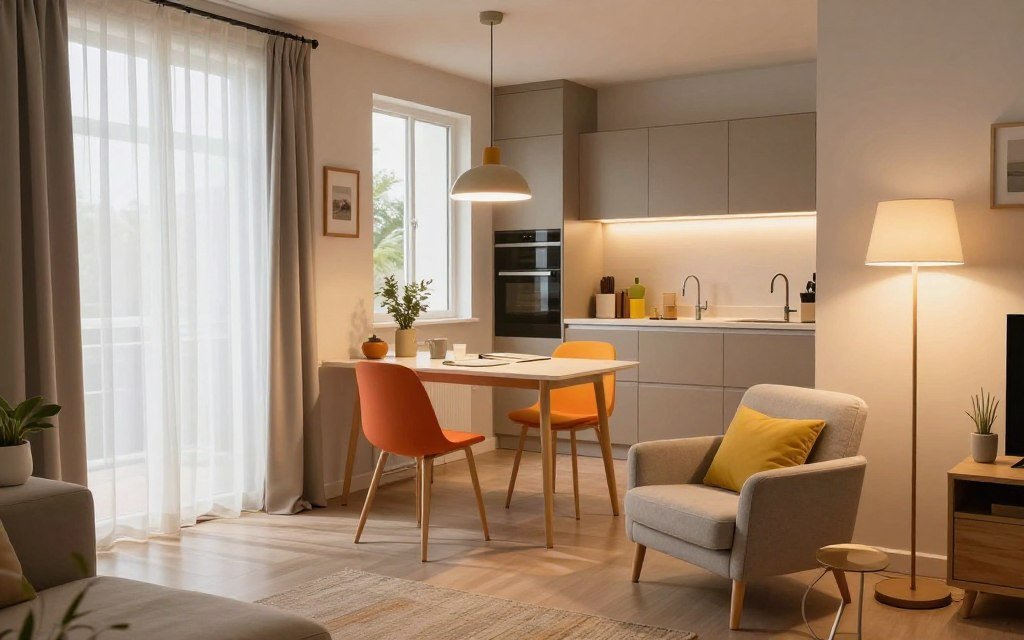
- Add a floor lamp in the corner to push the walls outward visually.
- Use plug-in wall sconces beside your bed instead of a table lamp to save surface space.
- Stick battery-operated, motion-sensor LED strips under your kitchen cabinets for cheap, wire-free task lighting.
The 5-Minute Evening Reset
In a small space, clutter doesn’t just look bad; it feels suffocating. You must reset the space daily.
Every night, spend 5 minutes putting things back in their “homes.” Fold the throw blanket, load the dishwasher, and clear the coffee table. Waking up to a reset apartment changes your entire mood for the day.
The Bottom Line
Making a small apartment functional isn’t about buying more stuff; it’s about being fiercely intentional with the stuff you already have. By auditing your daily friction, utilizing vertical space, and demanding that your furniture works as hard as you do, you can turn a cramped rental into a highly efficient, beautiful home.
You might not own the walls, but you absolutely own the flow of the space. Start with just one friction point today, and watch how much easier your home becomes to live in.
Quick FAQ: The Renter’s Cheat Sheet
How do I divide a studio without building walls?
Use visual anchors. An IKEA Kallax shelving unit placed perpendicular to the wall acts as a perfect room divider that also provides storage. Alternatively, use a large area rug (like Ruggable) to anchor your “living room” area, separating it visually from your “bedroom” area.
What if I’m not allowed to drill holes for storage?
Lean into tension and adhesive. Tension rods are incredible for creating storage under sinks or dividing shower corners. For walls, 3M Command Hooks and heavy-duty adhesive strips can hold surprisingly heavy items like kitchen utensils or artwork without peeling the paint.
How do I survive a kitchen with almost zero cabinet space?
You have to use the walls and add mobile storage. Use a magnetic knife strip, install a tension rod under the cabinet to hang spray bottles, and buy a slim rolling utility cart (like the Target Brightroom or IKEA Råskog) to act as a mobile pantry and prep station.
What’s the best way to maximize a tiny closet?
First, switch to slim velvet hangers to instantly double your rail space. Second, use the vertical space: add a second hanging rod for shorter items (like shirts) to create space for shoes underneath. Finally, use vacuum-seal bags (like Ziploc Space Bags) for out-of-season clothing and shove them on the very top shelf or under the bed.
How do I add good lighting without hiring an electrician?
Focus on portable, layered light. Use smart bulbs (like Philips Hue) in your existing floor lamps to change the mood from bright white (work) to warm amber (relax). Add motion-sensor LED puck lights under cabinets for task lighting, and use a plug-in wall sconce with a swivel arm for bedside reading.