How to Choose the Right Sofa for a Small Apartment
in a small apartment, your sofa isn’t just a place to sit. It’s your bed on movie nights, your dining room when you’re eating takeout, and the anchor of your entire living space.
Buy the wrong one, and it will swallow your room, block the walkway, and make your home feel like a crowded waiting room. Buy the right one, and it can make a tiny studio feel intentional, cozy, and surprisingly spacious.
The secret isn’t just buying “small” furniture. It’s about mastering scale, delivery logistics, and your actual daily habits. Here is your no-nonsense guide to finding the perfect sofa for your small space.
1: Measure Like You’re Moving In (Because You Are)
Everyone measures the wall. Almost no one measures the front door. A sofa that looks “apartment-sized” online can still be impossible to deliver if it can’t navigate your building.
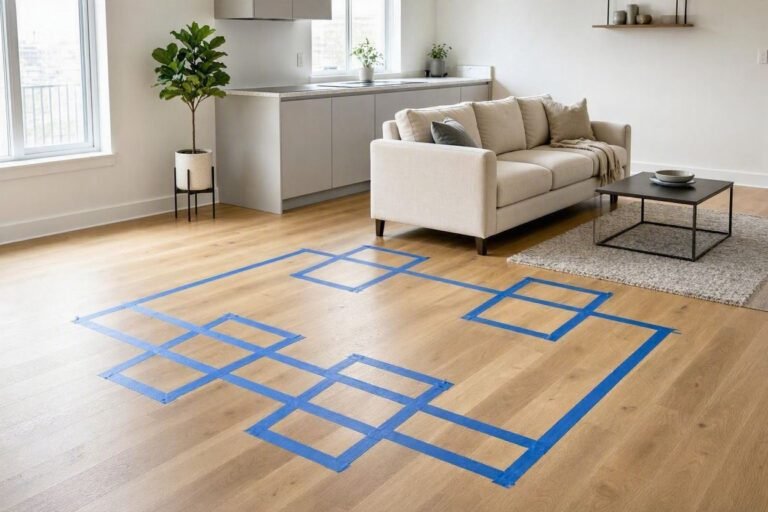
- The Room: Measure the wall space (subtracting baseboards or radiators) and the room depth. Always leave at least 30 inches for a clear walkway.
- The Delivery Route (The Nightmare Check): Measure your building’s front door, the hallway width, the elevator (both the interior and the door), and any sharp stairwell turns.
- The “Walk-Up” Solution: If your building is a walk-up with a tight stairwell, look for modular sofas (like Burrow or Floyd) that come in manageable boxes, or sofas with removable legs. A sofa that can’t make it up the stairs is just a very expensive lawn ornament.
2: Scale is Everything (It’s About Depth, Not Just Length)
The biggest mistake in small apartments is buying a sofa that is too deep.
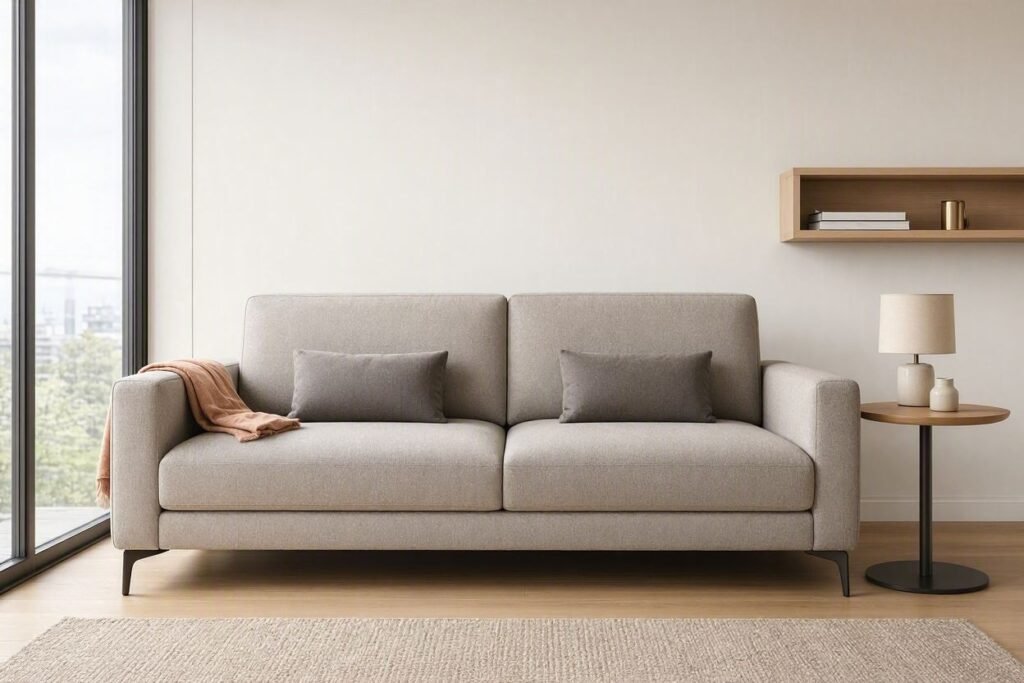
- The Depth Rule: Aim for a seat depth of 32 to 36 inches. Anything deeper (like those massive 40-inch “cloud” sofas) will eat up your floor space and push you into the coffee table.
- Ditch the Thick Arms: Rolled, overstuffed arms look cozy in a showroom but steal 6 to 10 inches of seating space on each side. Opt for track arms (straight, square arms) or low-profile arms. You get the exact same seating width in a much smaller footprint. (Check out the Article Sven for a great example of slim arms done right).
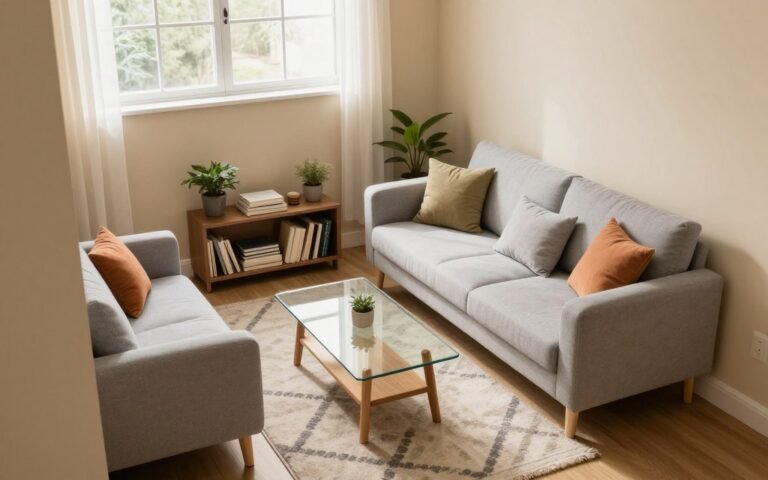
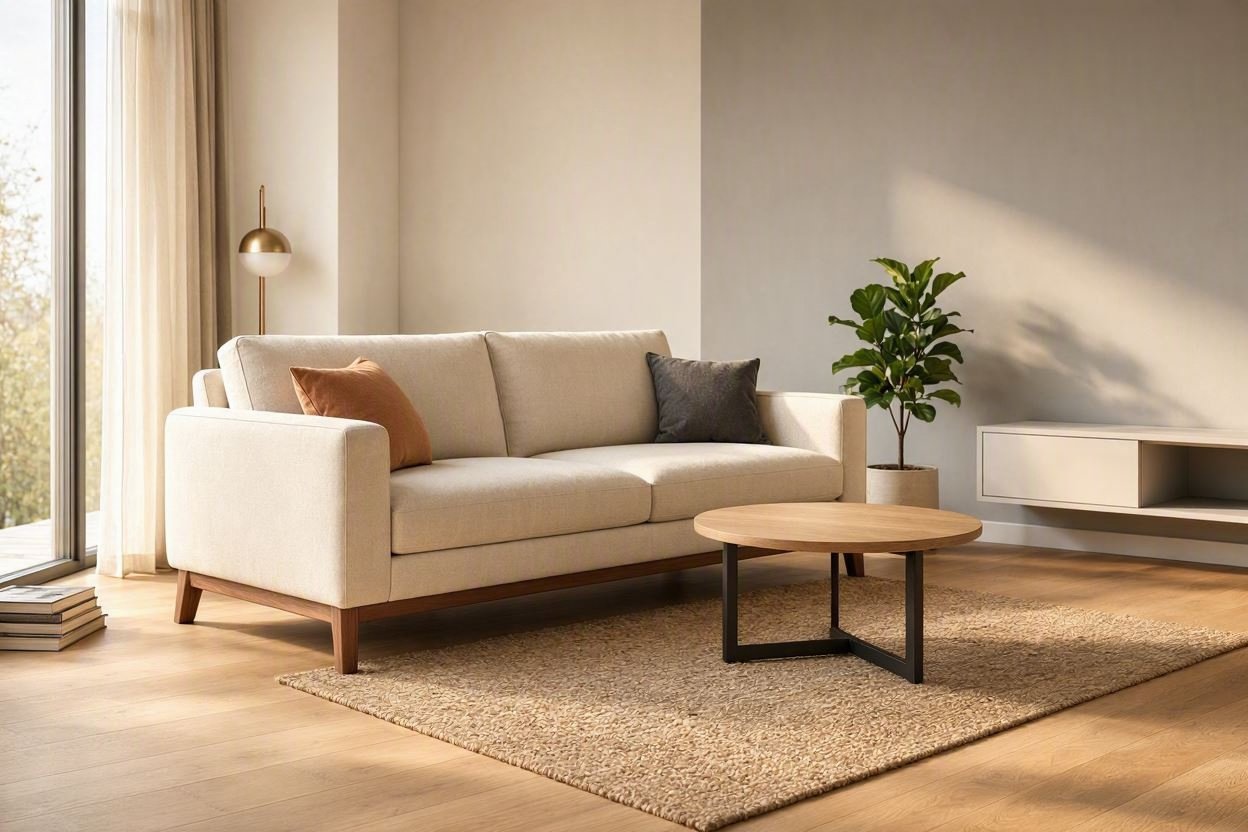
- The Visual Trick: Choose a sofa with raised legs (at least 4 to 6 inches high). Seeing the floor continue underneath the furniture tricks the eye into perceiving more square footage. Avoid heavy skirts that go all the way to the floor.
3: Match the Sofa to Your Actual Life (Not Pinterest)
Don’t buy a sleeper sofa just because it “might” be useful. Buy for how you actually live.
- The Daily Lounger: If you binge-watch TV every night, prioritize cushion fill (high-density foam or down-blend) and a slightly deeper seat.
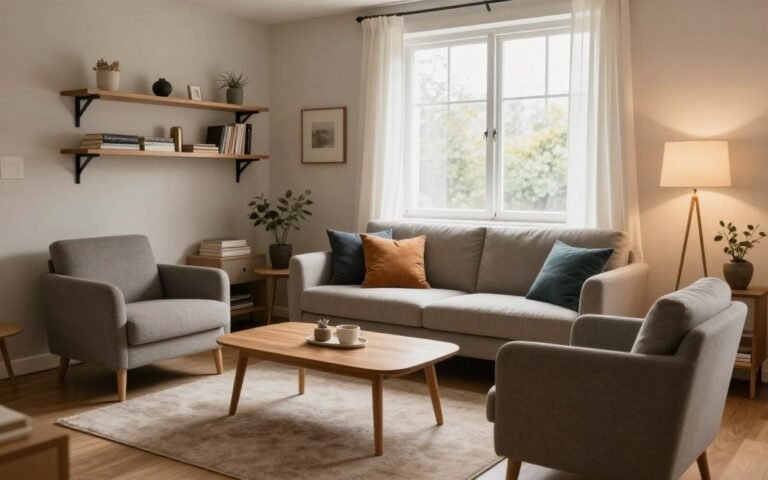
- The Frequent Host: If you entertain often, you need firm cushions that bounce back and durable fabric. A loveseat paired with two movable accent chairs is often much better for conversation (and flow) than a massive sectional that traps people in the corners.
- The Occasional Sleeper: If guests stay over once a year, skip the heavy, uncomfortable sleeper sofa. Buy a beautiful, comfortable standard sofa and invest in a high-quality air mattress. You’ll save money and get a much better couch.
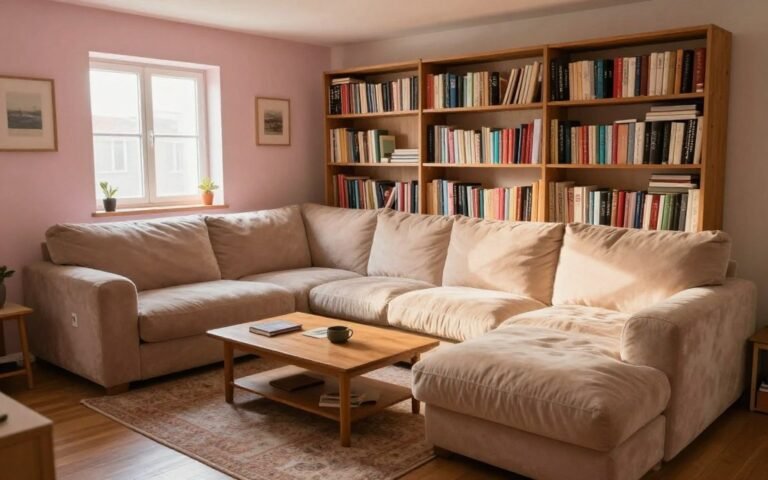
- The Sectional Trap: Only buy a small sectional (like an apartment-sized L-shape) if it genuinely replaces the need for extra chairs and doesn’t block a major walkway. Otherwise, stick to a sofa + ottoman.
4: Fabric & Details for Real Life
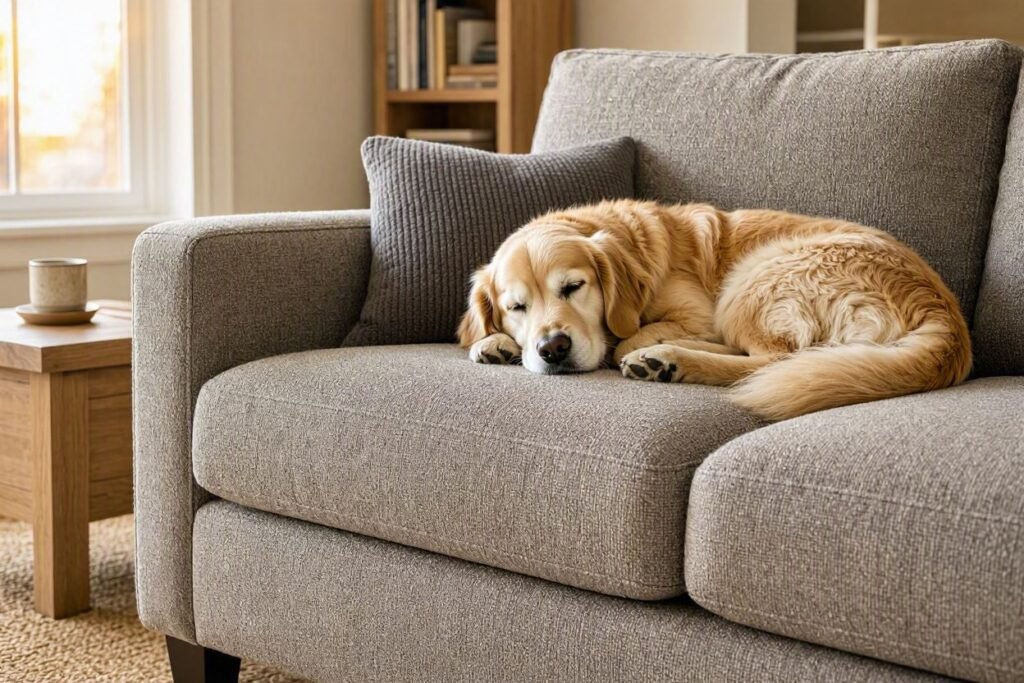
In a small space, your sofa takes a beating. It’s where you eat, drink, and let the dog sleep.
- Performance is King: Look for performance fabrics (like Crypton or Sunbrella) or tightly woven textured weaves. They resist stains and hide wear beautifully.
- Pets and Kids: If you have pets, skip the delicate silks or loose weaves that catch claws. Faux leather or micro-velvet are great because they are easy to wipe down and pet hair doesn’t embed as deeply.
- Color Strategy: Medium tones (greige, olive, navy) and textured fabrics are incredibly forgiving. A pure white sofa in a tiny apartment is a stress magnet unless it has removable, washable slipcovers (like the IKEA Ektorp or Kivik).
Phase 5: The “Don’t Do It” Quick List
- Don’t buy an oversized chaise: It looks great online but dominates a small room. If you want a chaise, make sure it’s short and doesn’t block the flow.
- Don’t forget the side table: Every sofa needs a landing spot for a drink or phone. If the sofa is so big there’s no room for a side table (or a C-table that slides over), it’s too big.
- Don’t ignore the “squeeze test”: If you have to suck in your stomach or turn sideways to walk past the sofa to get to the kitchen, it’s the wrong size.
Quick Reference: Which Sofa Fits Your Life?
| Sofa Type | Best For | The Vibe | Watch Out For |
|---|---|---|---|
| Loveseat (2-seater) | Studios, narrow rooms | Keeps the layout flexible and open. | Limited seating for guests; pair with a pouf. |
| Apartment Sofa (Compact 3-seater) | Most 1BR/2BR small living rooms | Real seating capacity without the bulk. | Can still overwhelm if the depth is too thick. |
| Small Sectional (L-shape) | Rooms where it replaces extra chairs | Ultimate lounging; defines the space. | Can block traffic; confirm left/right orientation! |
| Modular Sofa | Awkward layouts, frequent movers | Fits tight deliveries; highly reconfigurable. | Quality varies wildly by brand; check connectors. |
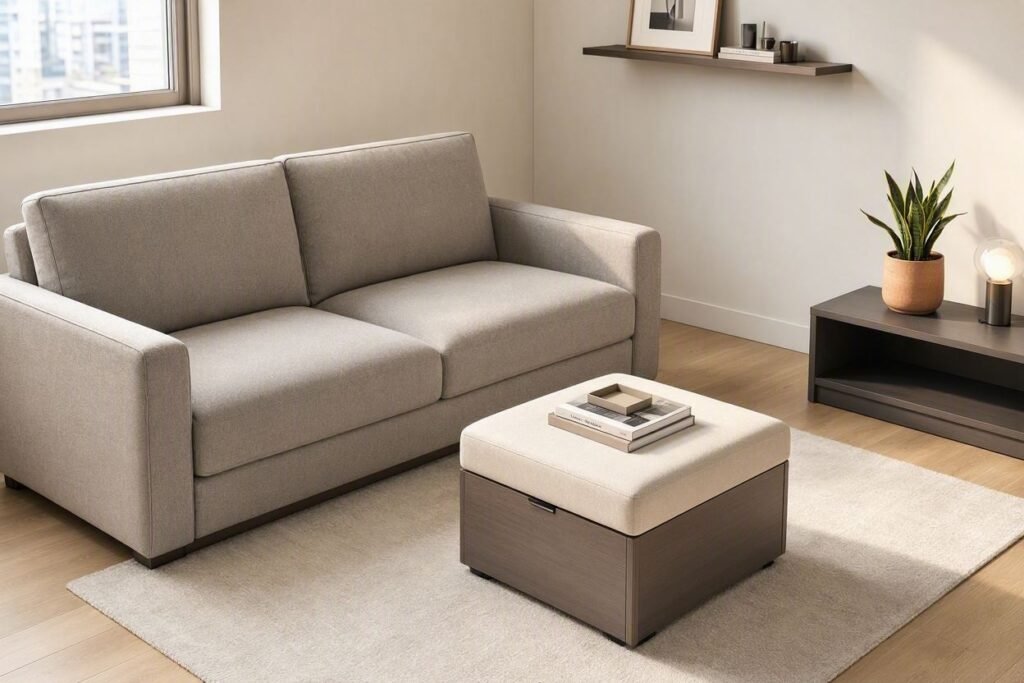
| Sofa + Ottoman | Flexible lounging + hidden storage | Ottoman can move, doubles as a table/seat. | Requires discipline to keep the ottoman styled. |
The Final “Before You Buy” Checklist
- You’ve measured the room and the delivery route (doors, elevators, stairs).
- The sofa depth (32″–36″) won’t shrink your main walkway.
- The upholstery matches your lifestyle (pets, kids, eating on the sofa).
- You’ve planned at least one surface nearby (side table or C-table) for your coffee.
- You can walk past it without turning sideways.
A small apartment doesn’t need a small-feeling sofa it needs a well-scaled one. When the proportions are right and the fabric fits your routine, the entire home feels easier to live in.