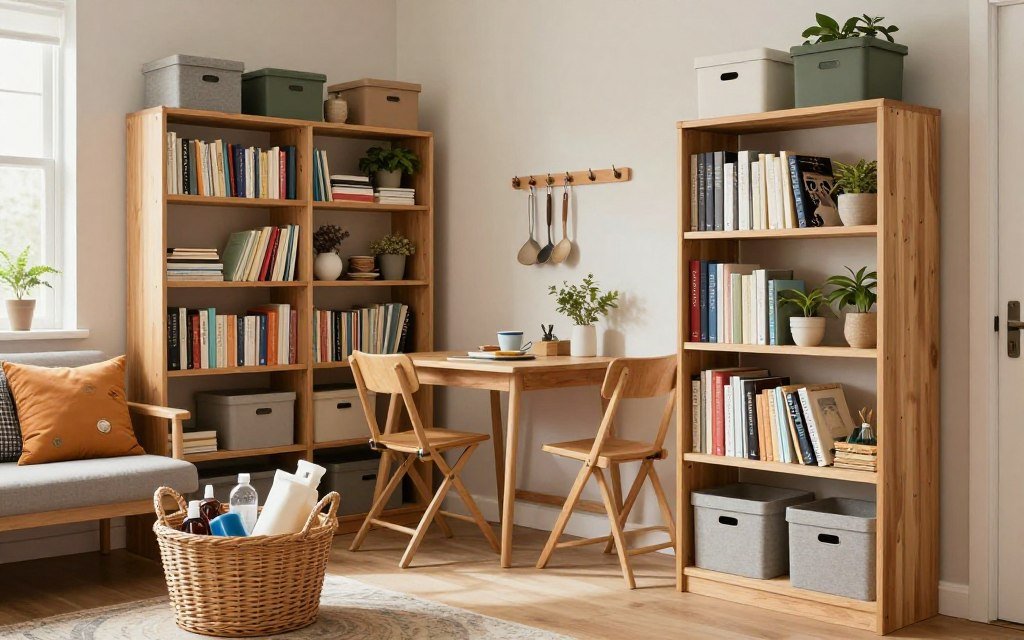
Why Small Homes Run Out of Storage So Quickly
Ever feel like your small home is drowning in clutter, even when you don’t actually own that much stuff? You’re not alone. Many people assume the solution to a messy small home is simply “more space” or “more storage bins.”
But here is the secret professional organizers know: The problem isn’t usually a lack of space; it’s a lack of intention.
A small home requires a shift in mindset. By understanding how space is truly used, editing your belongings ruthlessly, and implementing smart, habit-based systems, you can transform a chaotic, cramped apartment into a calm, highly functional sanctuary.
Let’s reclaim your space.
Phase 1: The Reality Check (Why Small Homes Feel Cluttered)
Before fixing the problem, we need to understand why it happens. Small homes face unique challenges that larger homes simply don’t.
The “Usable Volume” Illusion
Your floor plan might say your bedroom is 150 square feet, but the usable space is much smaller. Walkways, door swings, window clearances, and the space needed to open drawers all create “dead zones” where storage cannot go. Recognizing these physical limits is the first step to working with your space, not against it.
The “Just in Case” Trap
In small homes, everyday items are constantly competing for space with seasonal gear, holiday decorations, and “just in case” duplicates. Buying a second vegetable peeler because you couldn’t find the first one doesn’t just waste money; it steals precious cubic inches from the things you actually use and love.
The Visibility Factor
Clutter is a matter of ratio. In a large house, a pile of mail or three pairs of shoes by the door goes unnoticed. In a small apartment, those same three items can make the entire room feel chaotic.
| Challenge Type | Primary Cause | Impact on Space | Recommended Action |
|---|---|---|---|
| Architectural | Walkways, doors, windows | Reduced usable volume | Utilize vertical wall mounts & over-door solutions. |
| Behavioral | Duplicate & “just in case” items | Hidden storage waste | Inventory and purge regularly. |
| Volume | Excess overall belongings | Visual overwhelm | Declutter before organizing. |
Phase 2: The Pre-Organization Audit
Rule #1 of small-space organizing: Do not buy a single storage bin until you know exactly what you have and where it will go.
Map Your Space Like a Pro
Walk through your home with a notepad and a tape measure. Identify every potential storage zone: closets, cabinets, under-bed clearance, and even awkward corners. Measure the width, depth, and height of these spaces. Precision prevents the frustration of buying an organizer that doesn’t fit.
Track the Flow of Your Stuff
Pay attention to what enters and leaves your home for one week. You’ll quickly notice patterns: the mail that piles up, the shoes kicked off at the door, or the kitchen gadgets used exactly once a year. This data will dictate your storage strategy.
Set “Hard Limits” for Each Zone
Assign a specific purpose to every storage area. The easiest-to-reach spots (eye-level shelves, top drawers) are strictly reserved for daily essentials. If a zone is meant for winter coats, summer swimsuits do not belong there.
Phase 3: The Ruthless Edit (Declutter First)
You cannot organize clutter. Adding pretty baskets to a pile of things you don’t use is just hiding the problem.
The Four-Box Method
Tackle one area at a time and sort every single item into one of four categories:
- Keep: Used regularly and adds value to your life.
are in good condition. - Recycle/Discard: Broken, expired, or unusable items.
- Relocate: Items that belong in a different room (or a different house entirely!).
The “Sentimental Container” Rule
Sentimental items are the hardest to let go of, and they are the biggest space-hogs. Give your memories a boundary: choose one dedicated, beautifully decorated box for keepsakes. If the box is full, you must remove an old item before adding a new one. This honors your memories without letting them take over your home.
The Immediate Exit Strategy
The moment your “Donate” and “Trash” bags are full, take them to your car or the curb. Do not let them sit in the hallway. Temporary piles have a dangerous habit of becoming permanent clutter.
Phase 4: Strategic Zoning (Room by Room)
Now that you’ve edited your belongings, it’s time to build systems that match your daily habits.
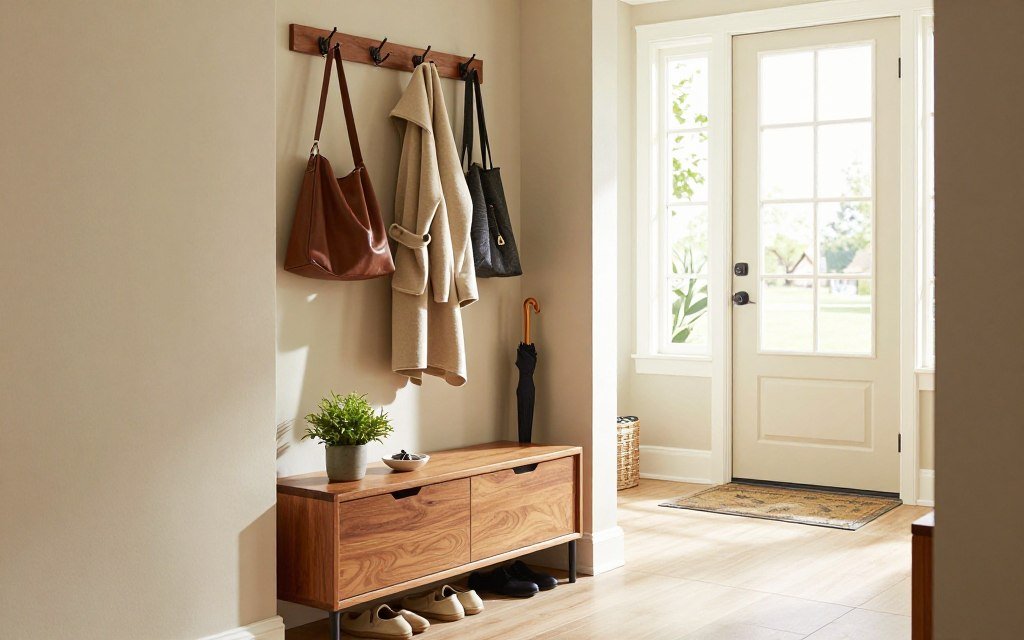
The Entryway: The 60-Second Drop Zone
Your entryway sets the tone for your entire home. Prevent outside clutter from migrating inward by creating a dedicated “landing strip.” Install wall-mounted hooks for coats and bags, and place a slim console table or floating shelf with a small tray for keys and mail.
The Kitchen: Master the “Golden Zone”
In the kitchen, store your most frequently used items in the “Golden Zone”—the area between your waist and your shoulders. This is where you can reach things without bending or stretching.
- Pro Tip: Use vertical dividers for cutting boards and baking sheets, and add shelf risers to double your stacking capacity for bowls and spices. Don’t forget the inside of cabinet doors for hanging lightweight items.
The Bedroom & Bathroom: Calm and Controlled
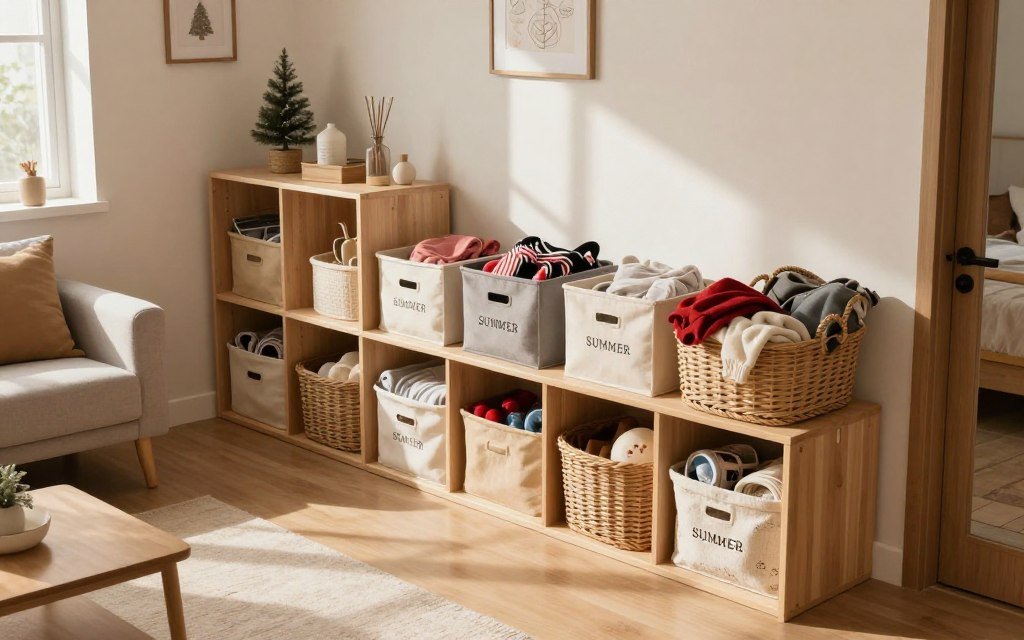
- Bedroom: Implement a strict seasonal clothing rotation. Use the valuable space under your bed for sealed, labeled containers holding off-season clothes or extra linens.
- Bathroom: Group items by routine. Keep daily skincare and toothbrushes at eye level. Store backup toiletries and heavy cleaning supplies in lower cabinets to prevent accidents and keep the vanity visually clear.
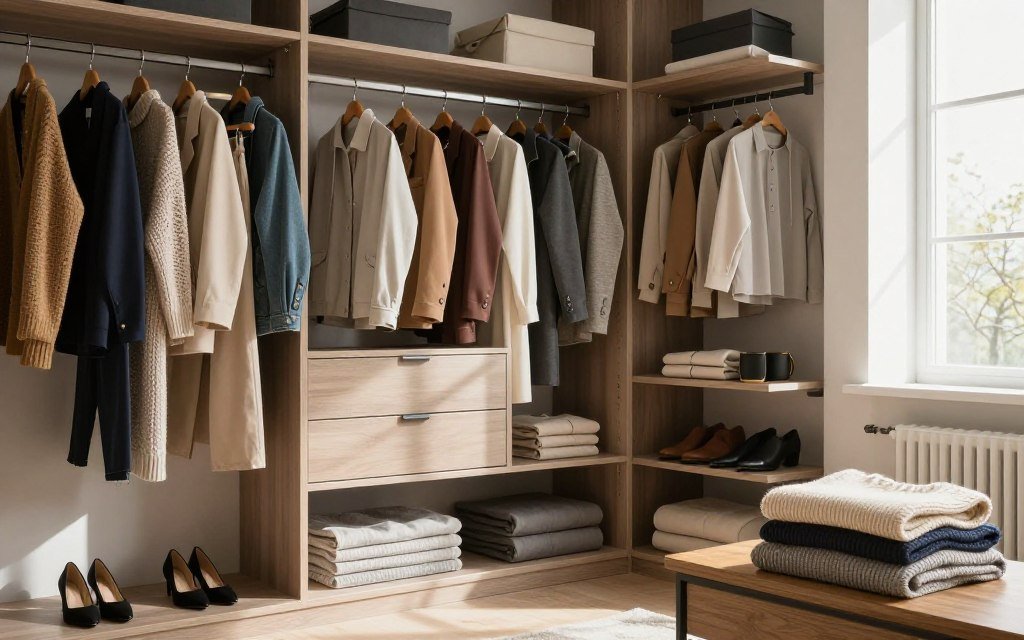
Phase 5: The Multi-Functional & Vertical Upgrade
When you can’t build out, you must build up and choose furniture that earns its keep.
Furniture That Works Overtime
In a small home, every piece of furniture should have a hidden superpower.
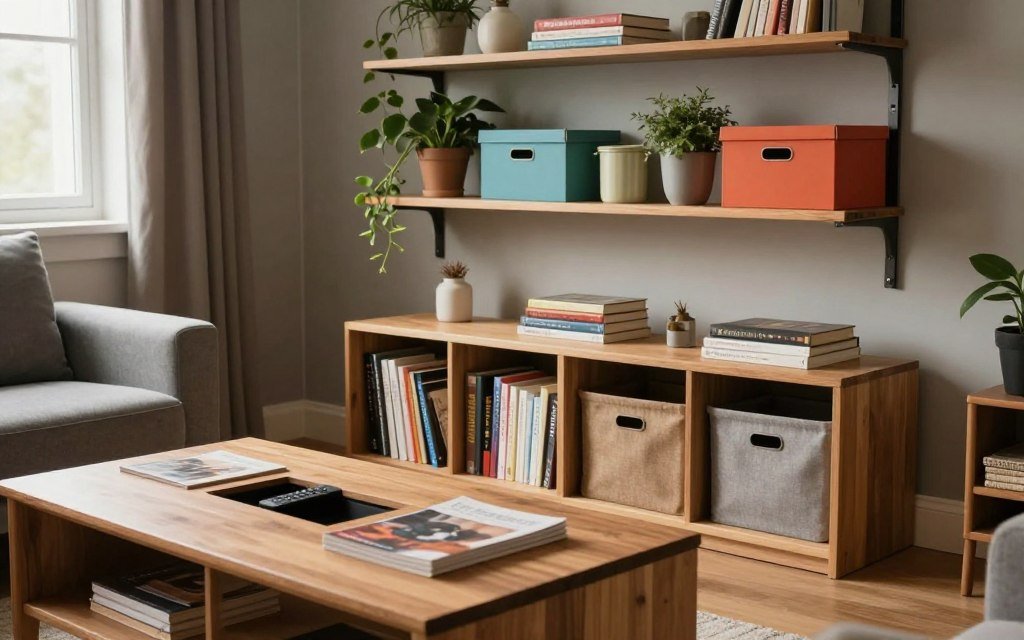
- Swap a standard coffee table for a lift-top table that offers hidden storage and a workspace.
- Choose a storage ottoman or a bed frame with built-in drawers.
- Use a slim, rolling cart in narrow gaps beside the refrigerator or washing machine.
Safe Vertical Storage
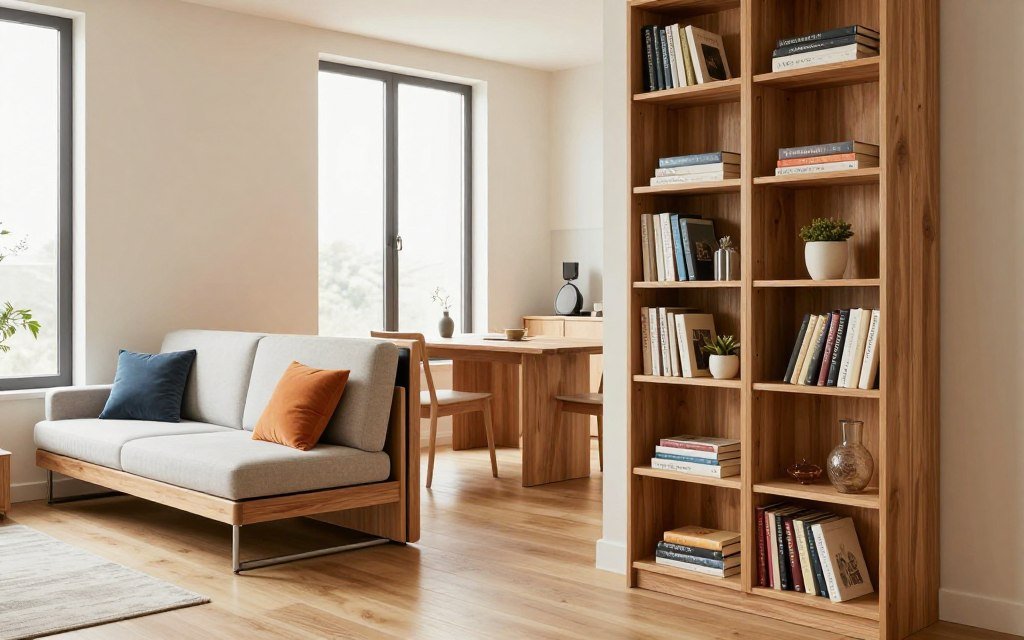
Wall-mounted shelves are a small-space miracle, but safety is non-negotiable. Always anchor tall furniture and shelving units directly into wall studs to prevent tip-overs. Reserve high, hard-to-reach shelves for lightweight, rarely used items (like holiday decor or spare toilet paper).
Phase 6: The Maintenance System (Making It Stick)
A brilliant storage system will fail without a simple, sustainable maintenance routine. Consistency is your best defense against clutter.
The Daily 5-Minute Reset
Spend five minutes every evening resetting high-traffic areas. Hang up tomorrow’s outfit, put keys in their designated bowl, load the dishwasher, and clear the entryway. Small daily habits prevent the need for massive, exhausting weekend cleanups.
The “One-In, One-Out” Rule
To prevent your hard work from unraveling, adopt this golden rule: for every new item you bring into your home, one old item must be donated, sold, or recycled. This applies to clothing, kitchen gadgets, books, and shoes. It forces you to be intentional about new purchases.
The Quarterly Reassessment
Life changes, and your home should adapt. Every few months, do a quick sweep:
- Are there expired items in the pantry?
- Has a storage solution become more frustrating than helpful? (If so, replace or remove it).
- Do your storage zones still match your current lifestyle?
Frequently Asked Questions (FAQ)
Why does my small home feel cluttered even when I don’t own many things?
Small rooms have less “usable volume” than their floor plans suggest. Walkways, door swings, and furniture clearances eat up space. In a small area, even a few everyday items (like shoes or mail) create a high visual ratio, making the space feel chaotic quickly.
What should I do before purchasing new storage bins?
Measure your space and declutter first. Sort your belongings into keep, donate, sell, and discard piles. Buying organizers before you know what you’re keeping often leads to wasted money and mismatched bins.
How can I make my kitchen more efficient with limited cabinets?
Focus on the “Golden Zone” (waist to shoulder height) for daily items. Use vertical dividers for pans, shelf risers for plates, and the inside of cabinet doors for lightweight tools. Keep countertops clear by storing appliances you don’t use daily.
What are the best furniture pieces for a small bedroom?
Invest in multi-functional pieces. A storage ottoman, a lift-top coffee table, or a bed frame with built-in drawers (like the IKEA MALM series) are game-changers. They provide hidden capacity without adding visual bulk.
How do I manage seasonal items without an attic or basement?
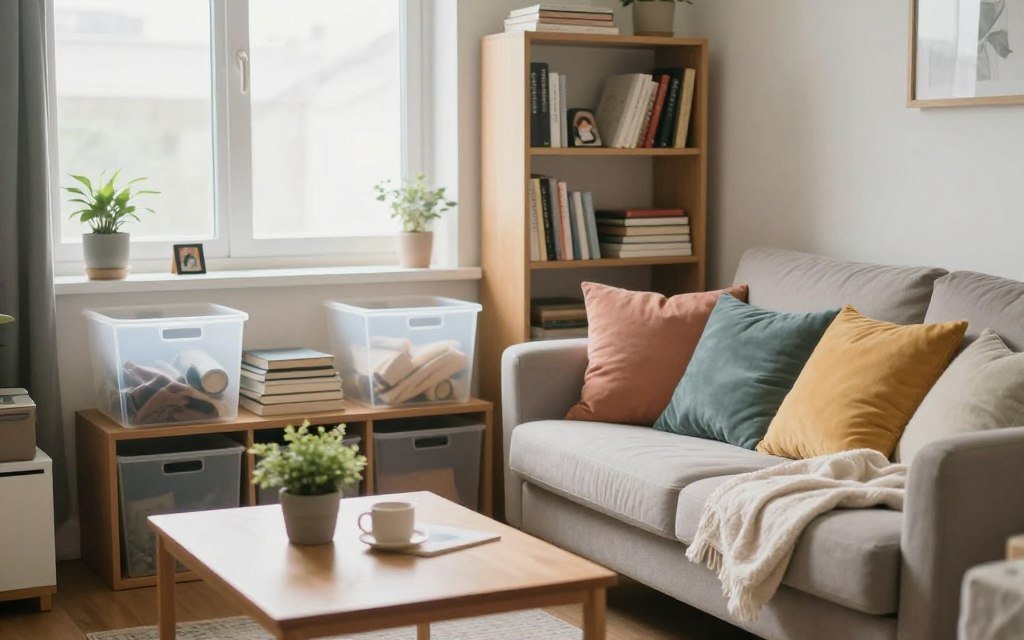
Use a seasonal rotation system. Pack winter gear or holiday decor in sealed, clearly labeled containers. Store these in low-priority zones like under the bed or on high shelves, freeing up prime, easy-to-reach space for your daily essentials.
Is it safe to install high vertical shelving in a small apartment?
Yes, absolutely—but safety is key. Always anchor shelves and tall furniture directly into wall studs. Keep heavy items on lower shelves and reserve the highest shelves for lightweight objects to maintain balance and prevent tipping.
How can going digital help me save physical space?
Digital tools drastically reduce paper accumulation. Scan important documents, receipts, and manuals, and store them securely in a cloud service. Additionally, utilize your local library or community tool-lending programs for books and gadgets you only need once or twice a year.
Final Thoughts
Transforming a small home isn’t about magically conjuring more square footage. It’s about seeing your space differently. It’s about recognizing that every item you own is essentially “renting” space in your home, and it needs to earn its keep.
By editing your belongings, utilizing vertical space, and committing to small, daily habits, you can build a home that feels spacious, peaceful, and perfectly tailored to your life.
Start small today: clear off one countertop, or tackle that one overflowing drawer. You’ll be amazed at how quickly a little intention can change the entire feel of your home.