How to Create Storage When You Have Very Little Floor Space
We’ve all experienced the “tiny apartment dance” sidestepping a shoe, hopping over a laundry basket, or gently nudging a bag out of the way just to walk across your own living room. When your floor space is limited, clutter doesn’t just look messy; it physically invades your life.
But here is the secret that professional organizers know: In a small home, the floor is not your friend.
To reclaim your space, you have to stop looking straight ahead and start thinking in 3D. By shifting your focus to vertical real estate, hidden compartments, and multi-functional furniture, you can build massive storage capacity without sacrificing a single square inch of walking room.
Let’s turn your cramped apartment into a spacious, highly functional sanctuary.
Phase 1: The “Dead Space” Audit
Before you buy a single storage bin, you need to see your apartment through the eyes of an organizer. You likely have far more storage potential than you realize.
Measure the “Invisible” Zones
Grab a tape measure (or a laser measure like the Bosch) and look for the spaces you usually ignore:
- The “Dead Air” Above Doors and Windows: There is almost always 12 to 18 inches of empty space above your interior doors and window frames. A simple, deep floating shelf up here is perfect for storing books, extra toilet paper, or labeled bins without blocking your view.
- The Under-Bed Canyon: Measure the exact clearance under your bed. If you have at least 6 inches, you have a goldmine for seasonal storage.
- The Ceiling Height: Knowing your exact ceiling height allows you to install tall, floor-to-ceiling units (like the IKEA PAX wardrobe system) that draw the eye upward and double your closet capacity.
The “Floor-to-Ceiling” Mindset
Stop looking at your room as a 2D floor plan. Look at it as a 3D box. Every inch from the baseboards to the ceiling is usable space if you approach it correctly.
Phase 2: Vertical Mastery (Walls and Doors)
When you can’t build out, you must build up. Vertical storage keeps your belongings accessible while leaving the floor completely clear.
Claim the Walls with Pegboards and Rails
Blank walls are just waiting to work.
- The Kitchen/Office: Install a heavy-duty metal pegboard (like Wall Control). It’s incredibly strong, looks industrial-chic, and allows you to constantly rearrange hooks, baskets, and shelves as your needs change.
- The Kitchen Counter: Swap bulky spice jars for a magnetic spice strip and use a hanging rail for utensils. This instantly clears your countertops.
The Magic of Over-the-Door Storage
The back of a door is prime, often-wasted real estate.
- The Pantry/Cabinet Door: Install a sturdy over-door rack to hold cleaning sprays, foil boxes, or extra pantry goods. It keeps heavy items off your counters and utilizes the door’s depth.
- The Bedroom/Bathroom Door: Use a slim, over-the-door shoe organizer not just for shoes, but for scarves, belts, cleaning supplies, or even toiletries. (The Elfa Utility Door Rack from The Container Store is a fantastic, heavy-duty option).
Go Tall and Narrow
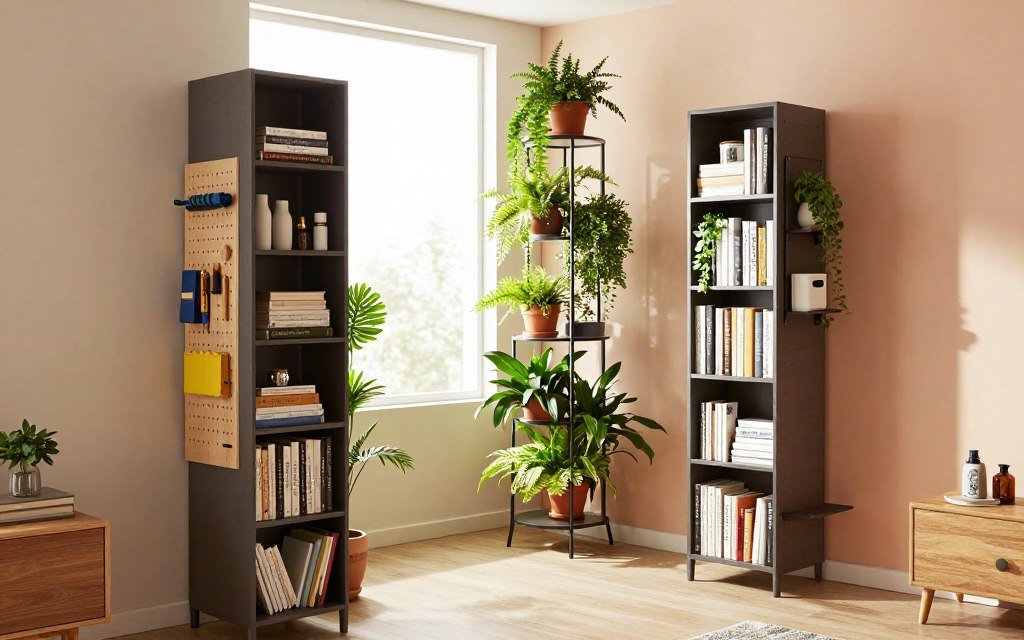
If you need a bookcase, skip the wide, squatty ones. Choose tall, narrow storage towers. They draw the eye toward the ceiling, making the room feel larger, and they can slide into tight gaps between furniture or in narrow corners.
Phase 3: Unlocking Hidden Real Estate
The best storage in a small home is the storage you don’t see. Hiding your clutter is just as important as organizing it.
Master the Under-Bed Space
If you don’t have a storage bed, use the space underneath it for off-season clothing, extra linens, or holiday decor.
- Pro Tip: Use clear, rolling bins so you can easily pull them out. Always label them, and measure your clearance height before buying to ensure they actually slide in and out smoothly.
Hack the Inside of Your Cabinets
Deep cabinets are a black hole for small items. Fix this from the inside out:
- Shelf Risers: Use these to double your vertical space for plates, bowls, or canned goods.
- Pull-Out Baskets: Install sliding baskets in deep lower cabinets so you don’t have to crawl on the floor to reach the items in the back.
- Internal Drawers: Add shallow, built-in drawers inside tall cabinets to separate small items like foil, wraps, and sandwich bags.
The Under-Staircase (If You Have One)
If you live in a tiny house or a duplex, the space under the stairs is a massive opportunity. Install custom pull-out drawers for sports gear, or build open shelving for a cozy reading nook. If custom cabinetry is out of your budget, use uniform, heavy-duty crates (like Sterilite) to create a clean, modular look.
Phase 4: Furniture That Works Overtime
In a tiny home, a piece of furniture that only does one job is a luxury you can’t afford. Every item needs to pull double duty.
The “Double-Duty” Bedroom
- Storage Beds: Invest in a bed with built-in drawers (like the Pottery Barn or IKEA Malm lines) or a bed frame with hydraulic lift. This eliminates the need for a bulky dresser.
- Headboard Shelving: Choose a headboard that features built-in shelves or a ledge to replace your nightstands.
Living Room Heroes
- Storage Ottomans & Benches: Use a storage ottoman as your coffee table or extra seating. It hides blankets, board games, or electronics while providing a soft, welcoming look.
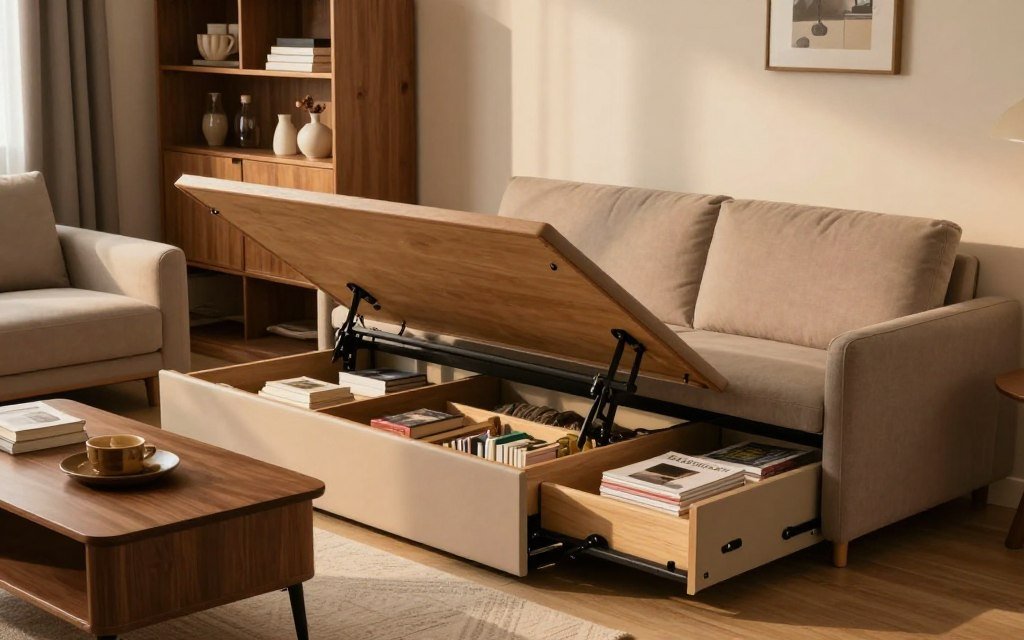
- Lift-Top Tables: A lift-top coffee table reveals a hidden compartment for remote controls and magazines, and raises the surface to a comfortable height for working or eating.
Phase 5: Visual Calm (The Secret to Small Spaces)
In a small space, visual clutter feels exactly like physical clutter. If your eyes are overwhelmed, your brain feels cramped.
The Power of Uniformity
Ditch the mismatched, brightly colored boxes. Invest in a set of matching, neutral-toned bins or clear acrylic organizers. When your storage looks uniform, the brain processes the room as “clean” and “spacious,” even if the bins are packed to the brim.
Label Everything
Use a label maker (the Brother P-touch is a favorite among organizers) or a simple label writer. Clear labels eliminate the need to open every box to find what you need, and they enforce the system for everyone in the house. Group similar items by task (e.g., “Baking Supplies,” “Bathroom Cleaning,” “Winter Accessories”).
Frequently Asked Questions (FAQ)
How do I accurately measure my small room to ensure new storage fits perfectly?
Don’t just measure the empty wall. Measure the obstacles. Note the depth of your baseboards, the width of your window trim, and the exact swing radius of your doors. When measuring for tall units (like IKEA PAX), measure to the ceiling, but leave at least 1-2 inches of clearance at the top so you can actually assemble it without scraping the paint.
What are the most effective vertical storage solutions for a kitchen with no pantry?
Look to your walls and doors. A Wall Control metal pegboard is incredible for hanging pots, pans, and utensils. Use floating shelves or magnetic strips (like those from Stonewall Kitchen) to clear your counters. For dry goods, a narrow, rolling storage tower can slide into a 6-inch gap next to your fridge.
How do I decide which items belong in hidden storage versus open shelving?
Use the “Frequency Rule.” If you use it daily (coffee mugs, daily skincare, keys), it belongs on open shelving or in easy-to-reach drawers. If you use it monthly or seasonally (holiday decor, winter coats, extra paper towels), it belongs in hidden storage like under-bed bins (Rubbermaid) or a storage ottoman (West Elm).
Can I create storage in a small entryway without making it feel cramped?
Absolutely. Keep the floor clear. Use the back of the door for an over-the-door rack (Elfa Utility) for shoes and umbrellas. Install a row of heavy-duty wall hooks (Command Hooks work great for renters) for bags and jackets. If you have a few inches of depth, a slim console table with a single drawer is perfect for catching keys and mail.
What furniture pieces offer the best “double duty” storage for a bedroom?
A storage bed with deep drawers is the ultimate space-saver, often replacing a dresser entirely. If you need seating, a storage bench at the foot of the bed hides linens. In corners, use tall, narrow corner shelving units to hold lamps and books without encroaching on your walking path.
How do I prevent my small storage bins from looking messy?
Visual consistency is your best friend. Use matching containers in neutral tones (white, clear, or grey). Avoid mixing patterns. Use a label maker to create clean, uniform labels, and adopt “The Home Edit” method of grouping similar items together. A packed cabinet of matching, labeled bins will always look cleaner than a half-empty cabinet of mismatched boxes.
Final Thoughts
Creating storage in a tiny space isn’t about magically finding more square footage; it’s about changing how you interact with the space you already have. By lifting your belongings off the floor, utilizing the “dead air” above doors, and demanding that your furniture works as hard as you do, you can transform a cramped apartment into a beautifully organized home.
Start small today. Clear off your kitchen counter, or measure the space above your bedroom door. You’ll be amazed at how quickly a little vertical thinking can change your entire life.