The Complete Guide to Shoe Storage: How to Organize Shoes in Any Space
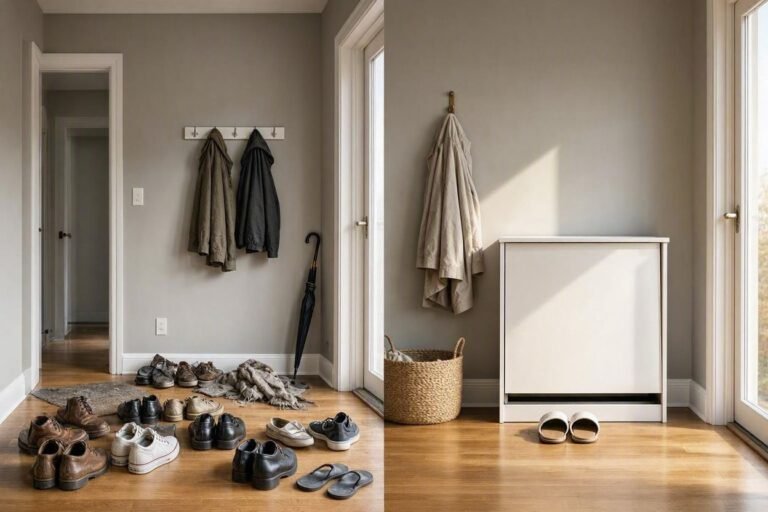
We’ve all been there. You’re running late, kicking off your shoes at the door, and suddenly you’re standing in a sea of sneakers, boots, and stray sandals. Shoe clutter is notoriously stubborn. Unlike a sweater you can fold or a towel you can stack, shoes are awkward, bulky, and they track in dirt.
But creating a system that actually works doesn’t mean you need to buy a massive custom closet or spend a fortune on matching plastic bins. It just means matching your storage to how you actually live. Let’s fix that entryway avalanche and build a shoe system you’ll actually use.
Assess Your Shoe Storage Needs
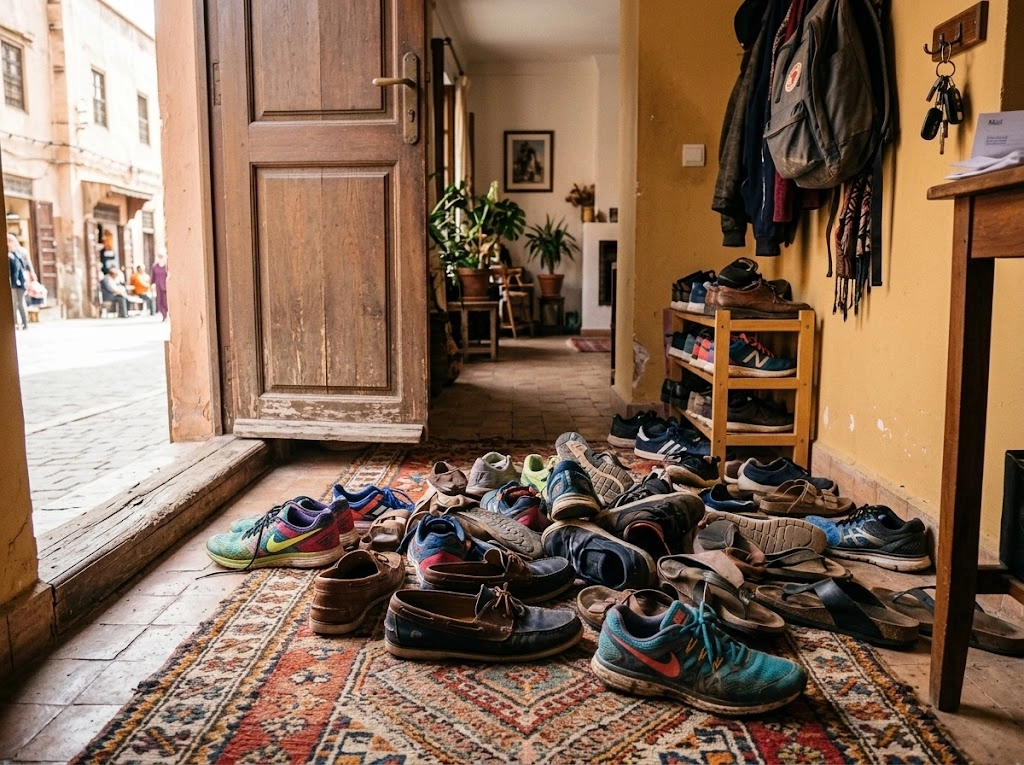
Before you buy a single storage rack, take a hard look at what you actually own and how you use it. Most shoe systems fail because we design them for the people we wish we were, not the people we are. If you wear the same three pairs of sneakers every week, you don’t need a 50-pair display wall.
Start by measuring your space and counting your shoes. Here is a quick breakdown of how much vertical room different styles actually need:
| Shoe Style | Vertical Clearance Needed |
|---|---|
| Flats, Loafers & Sandals | 3 to 4 inches |
| Standard Sneakers | 5 to 7 inches |
| Ankle Boots & Heels | 7 to 9 inches |
| Tall Boots & Winter Gear | 14 to 20+ inches |
Next, think about your daily routine. If your family naturally drops their shoes at the front door, building a pristine storage system exclusively in an upstairs bedroom closet won’t work. The entryway will just fill up again. Plan to keep your most-worn shoes near the door, and push the rest to secondary spaces.
Declutter and Sort Your Shoes
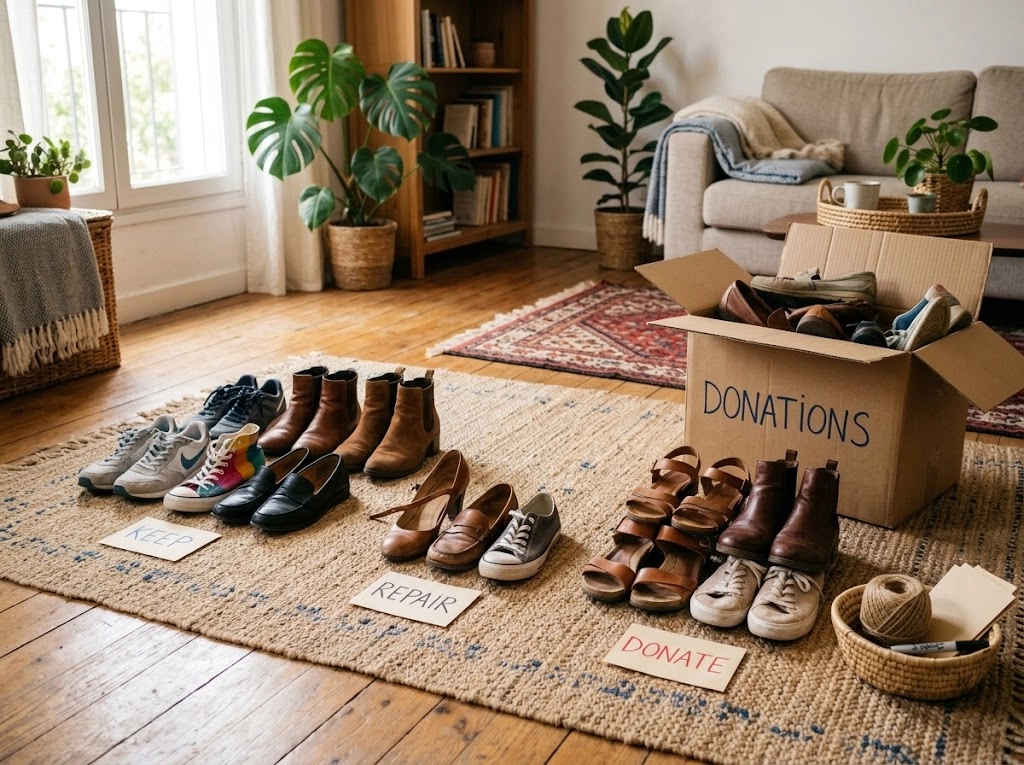
This is the messy part, but it’s the most important. Pull every single pair out of your closets, the car trunk, and the back of the entryway. Put them all in one pile.
Now, be ruthless. If they pinch your toes, if the sole is peeling, or if you haven’t worn them in over a year, they have to go. Group them into three piles:
- Keep: Your daily drivers and favorite seasonal pairs.
- Repair: That one good pair of boots that just needs a new heel or a deep clean. (If you don’t take them to the cobbler this month, move them to the exit pile).
- Exit: Donate the gently worn ones, sell the designer pairs, and recycle the ones with blown-out soles.
Choose the Right Shoe Storage Solution
Don’t just buy what looks pretty on social media. Buy what fits your daily routine. If you’re always rushing out the door, an open rack is better than a cabinet with tricky latches. If you hate dust, you need enclosed boxes.
Here is a simple guide to picking the right hardware:
| Storage Option | Who It’s Best For |
|---|---|
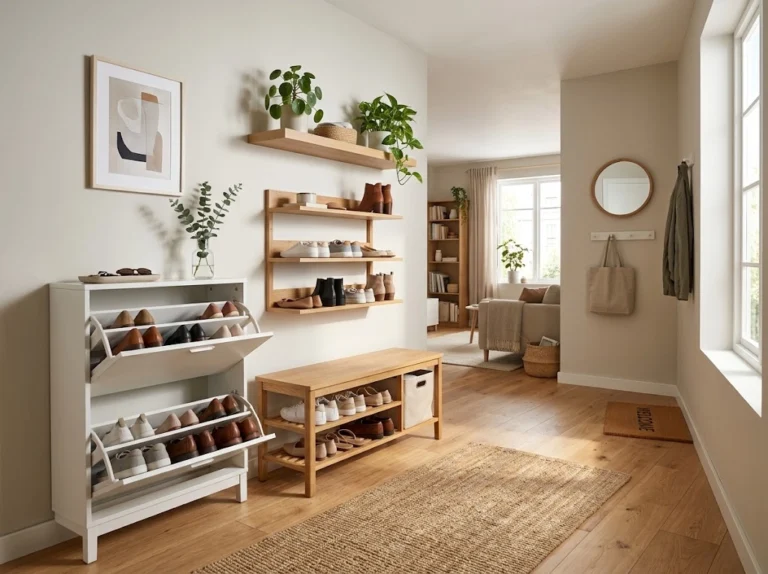
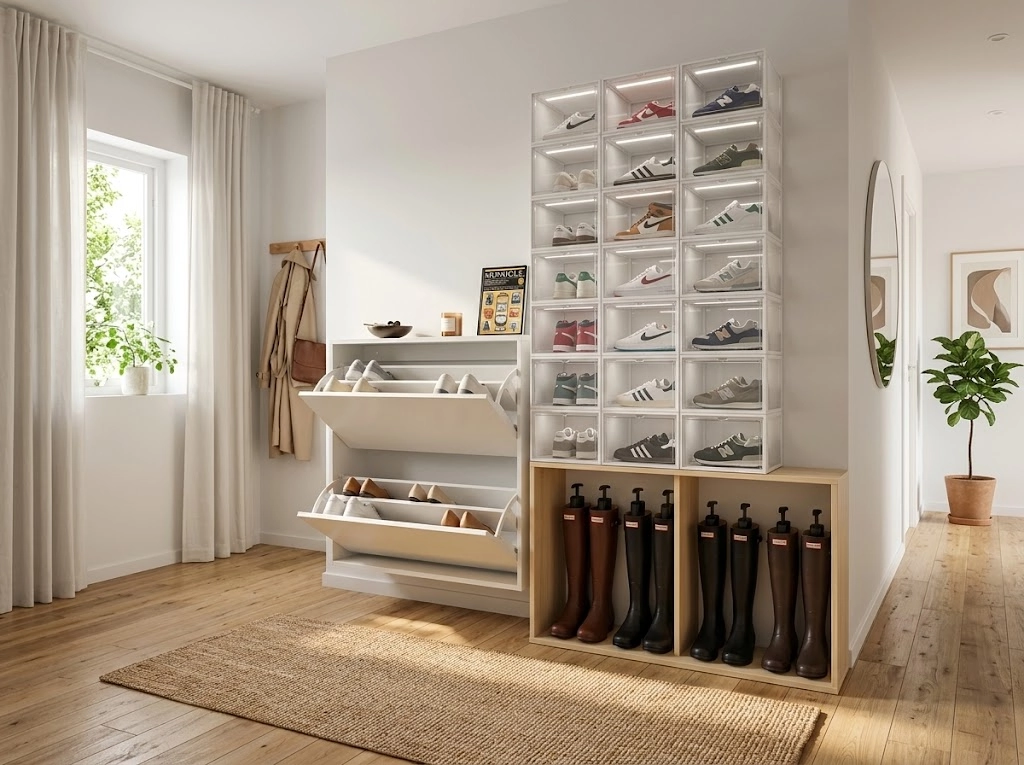
| Slim Tilt-Out Cabinets | Narrow hallways; hides clutter completely. |
| Open Tiered Racks | Closets and mudrooms; great for quick grab-and-go. |
| Clear Drop-Front Boxes | Sneaker collectors; protects from dust and saves space. |
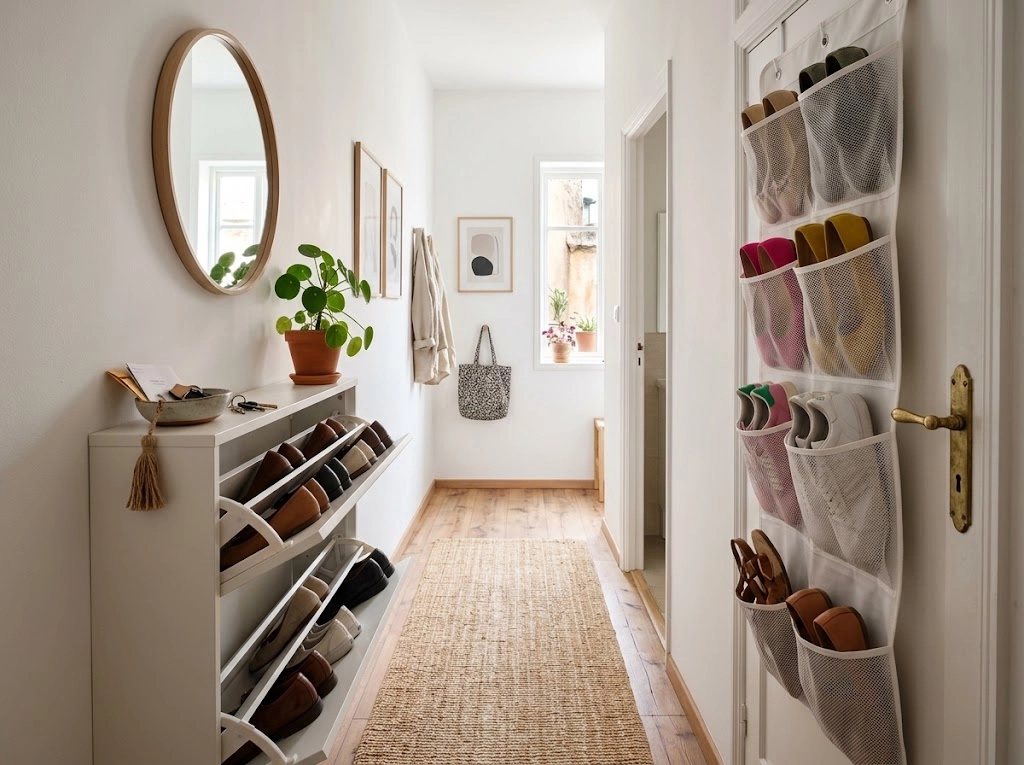
| Over-the-Door Pockets | Renters and small apartments; uses zero floor space. |
Shoe Storage for Small Spaces
When you don’t have a dedicated mudroom or a walk-in closet, you have to get creative. Think vertical and hidden.
Over-the-door organizers are a lifesaver for renters. Just make sure you buy ones with sturdy mesh or clear plastic pockets so the shoes can breathe. Slim tilt-out cabinets are brilliant for narrow hallways because they only take up about 8 inches of depth, and the top gives you a nice spot to drop your keys.
And never underestimate the space under your bed. It’s perfect for off-season shoes. Just make sure you use low-profile drawers with wheels so you can actually reach them without breaking a sweat.
Shoe Storage for Different Areas of the Home
Every room has a different job, and your shoes should be stored accordingly.
Your entryway needs to handle the dirty, wet shoes. Put down a rubber boot tray with raised edges to catch the mud and rain. Keep a strict limit here: only the shoes you’ve worn in the last 48 hours are allowed in this zone.
Your bedroom closet should be for clean, everyday shoes. This is where you can use nicer storage like clear acrylic boxes or wooden shelves.
Keep the garage or utility room strictly for work boots, gardening clogs, and rain boots. Never put your nice leather shoes in an unheated garage where the temperature swings will ruin the glue and dry out the leather.
How to Store Different Types of Shoes
Different shoes need different treatment if you want them to last.
Tall boots will crack and crease if you just let them flop over. Stuff them with plastic boot shapers, pool noodles, or even rolled-up magazines to keep the shafts upright.
Sneakers need to breathe. Don’t seal them in airtight plastic for months, or the foam midsoles can break down.
High heels take up too much space if stored side-by-side. Store them heel-to-toe (one facing forward, one facing backward) to cut the horizontal space they take up by nearly a third.

How to Store Seasonal Shoes
When the weather changes, do a quick swap. But don’t just shove your winter boots into a box and forget about them until December.
Clean them first. Dirt and road salt will eat through the leather and stitching over a few months. Wipe them down, let them dry completely (this is crucial to prevent mold), and store them in breathable cotton bags or plastic bins. Drop a silica gel packet into the bin to control moisture and keep things smelling fresh.
How to Protect and Maintain Your Shoes
A little maintenance goes a long way in making your shoes last.
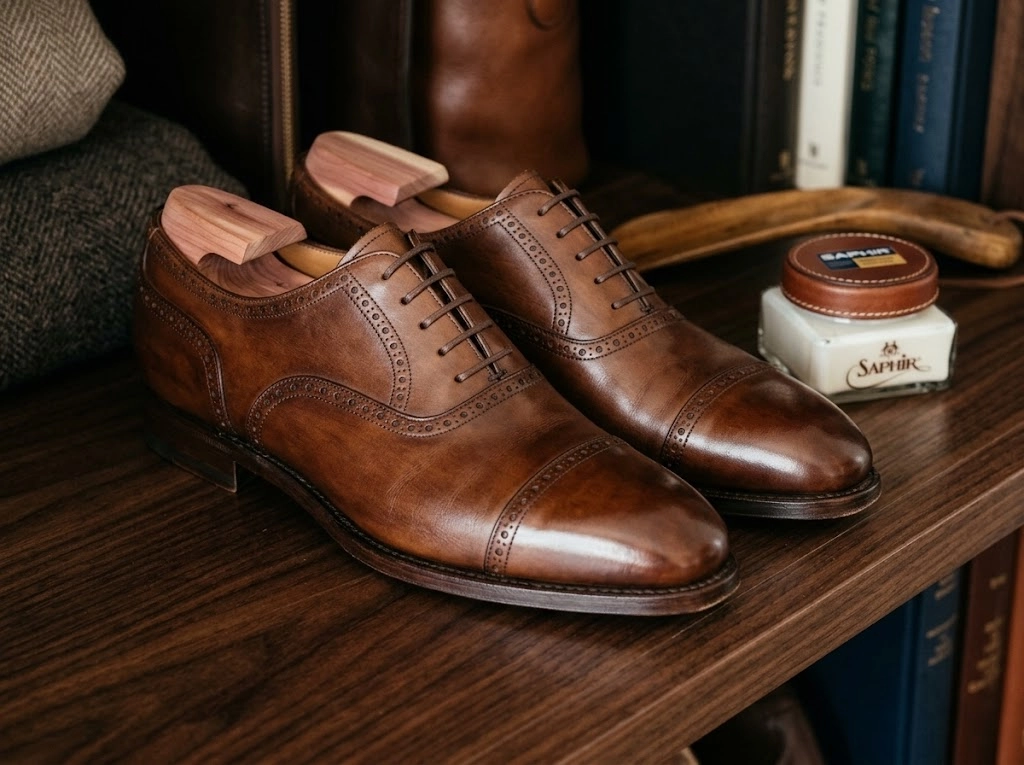
Cedar shoe trees are worth every penny for leather shoes. They absorb interior sweat, keep the shoe’s shape, and stop deep creases from setting in as the leather dries.
Also, let your shoes air out for a few hours before putting them away in a closed cabinet. Trapping foot sweat in a dark, enclosed box is a guaranteed way to get a terrible smell that will ruin the wood or plastic of your storage unit.
Common Shoe Storage Mistakes
Avoid these traps that ruin both shoes and storage systems:
- Using wire racks for high heels: The heels just slip through the wire gaps, scratching the leather and causing the shoes to fall over. If you must use wire racks, lay down a cheap plastic shelf liner first.
- Piling shoes in a basket: The bottom pair gets crushed, and the dirt from the soles ruins the uppers of the shoes sitting on top of them.
- Storing shoes in the attic: The extreme heat in an attic will literally melt the glue holding your soles together and dry out the leather until it cracks. Keep your shoes in climate-controlled living spaces.
How to Keep Your Shoe Storage Organized
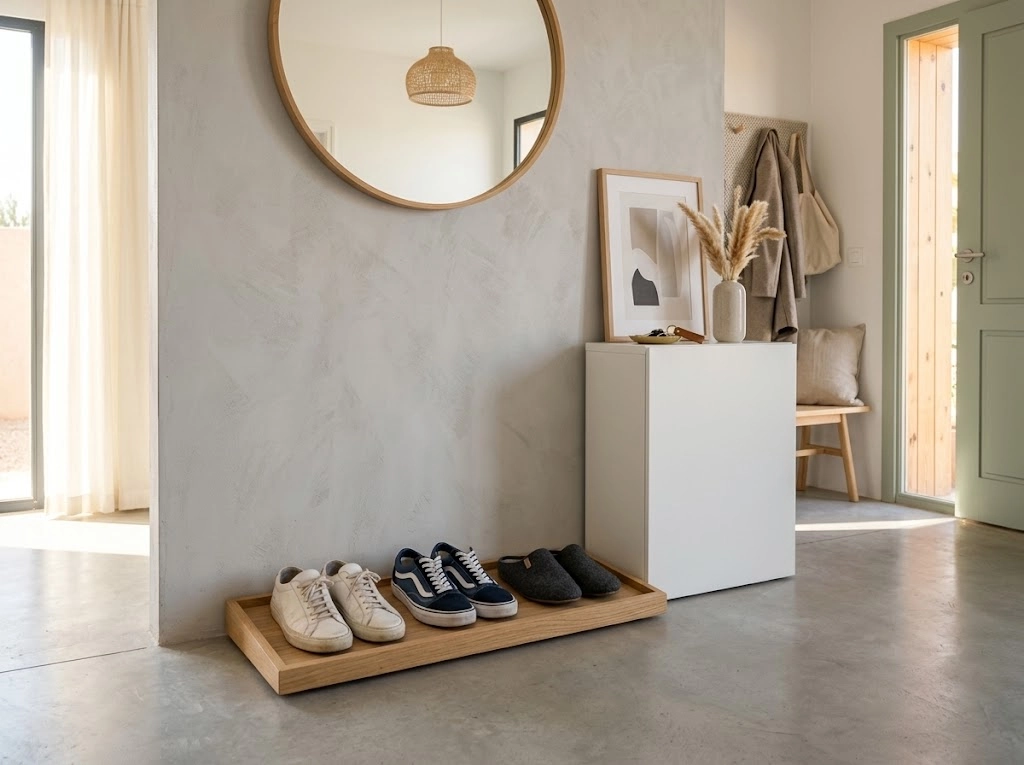
The secret to keeping it organized is reducing friction. If it’s hard to put shoes away, you won’t do it. Keep a daily shoe tray or a small bench by the door for your current rotation so it’s easier to drop them there than to kick them into a corner.
Most importantly, enforce a strict “one in, one out” rule. Shoe collections expand silently. If you buy a new pair of running shoes, an old pair needs to be donated or tossed. This keeps your collection from outgrowing your storage space.
Organizing your shoes isn’t about having a massive, magazine-worthy closet. It’s about creating a system that makes sense for your daily life. By decluttering, choosing the right hardware for your specific space, and doing a quick seasonal swap, you’ll stop tripping over footwear and start actually enjoying your collection. Take it one pair at a time, and your entryway will thank you.
FAQ
Are clear drop-front shoe boxes really worth the investment?
Yes, especially if you have closet space. They protect your shoes from dust and keep them visible. The drop-front design means you can pull out the bottom pair without unstacking the whole tower. Just make sure they have small ventilation holes in the back so the shoes can breathe.
How do I stop my closed shoe cabinet from smelling?
Never put damp or sweaty shoes straight into an enclosed cabinet; let them air out on a mat for a few hours first. You can also place small bags of activated bamboo charcoal on the shelves to absorb odors naturally, and wipe the shelves down monthly with a mix of water and white vinegar.
What is the best way to store boots so they don’t crease?
Tall boots should never be allowed to sag. Use tension-based plastic boot shapers or rolled inserts of heavy cardboard to keep the shaft upright. If you are short on floor space, use padded hanging boot clamps to suspend them from a standard closet rod.