How to Store Shoes When You Don’t Have a Shoe Closet
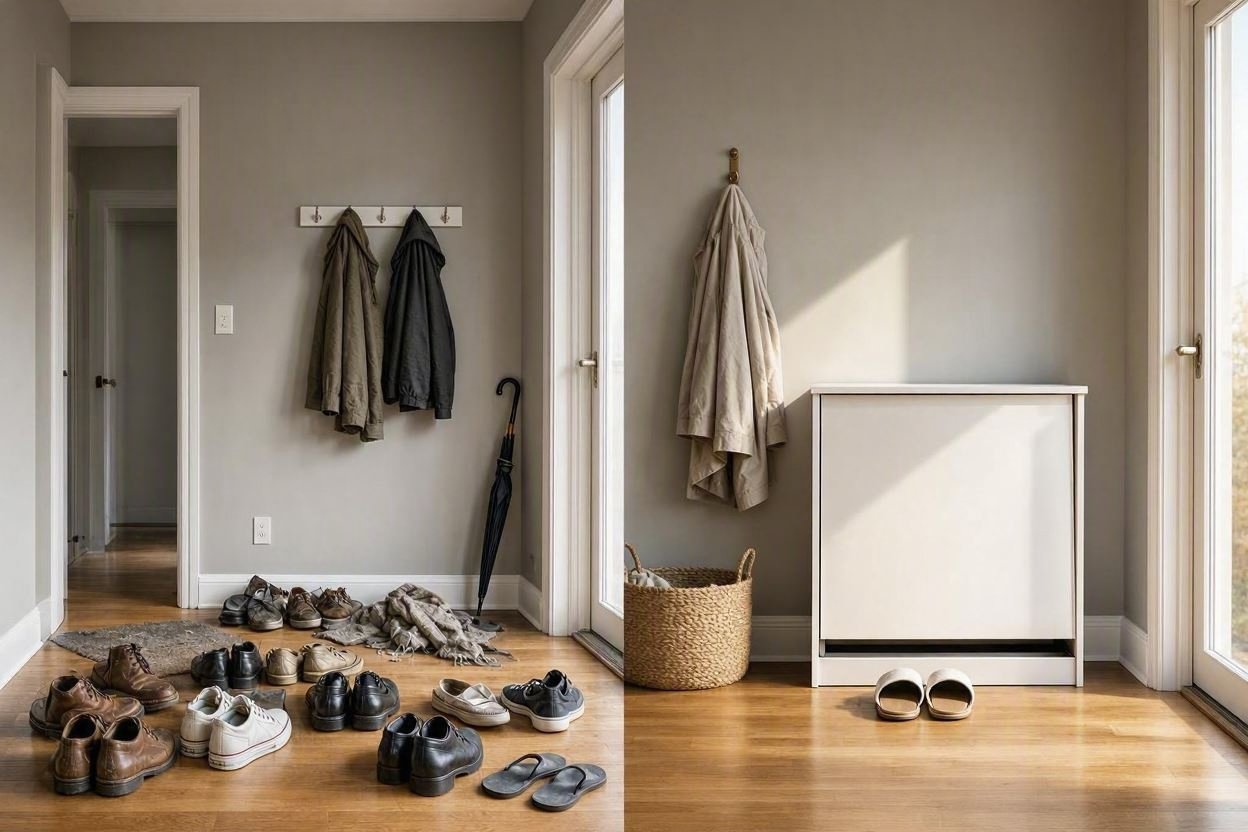
We’ve all walked into a house where the entryway looks like a sneaker explosion. If you don’t have a dedicated shoe closet, it’s incredibly easy for footwear to take over your floors, trip your guests, and make your home feel chaotic.
But here is the secret: you don’t need a massive mudroom to solve this. You just need to stop treating shoes like “miscellaneous clutter” and start treating them like a curated collection.
When you manage shoes by frequency of use and match the storage to your actual floor plan, the mess disappears and getting ready in the morning becomes a breeze. Here is your practical, no-stress guide to hacking shoe storage in any home.
The Great Shoe Edit (Before You Buy Bins)
The biggest mistake people make is buying organizers for shoes they don’t actually wear. Before you spend a dime on storage, you need to edit your collection.
The “Frequency” Sort:
Take every single pair of shoes out of your closet and sort them into four piles:
- The Daily Drivers (3–6 pairs): Sneakers, work shoes, or everyday flats. These get the “prime real estate” right by the door.
- The Weekly Rotation (Work heels, nice boots): These go in a nearby closet or under the bed.
- The Seasonal Squad (Winter snow boots, summer sandals): These get banished to the highest shelf or deepest under-bed bin.
- The “Purgatory” Pile: Shoes that hurt your feet, have a broken heel, or haven’t been worn since 2022. Rule of thumb: Don’t pay for storage space (in your home) for regret. Donate or toss them.
The Master Storage Guide (Choose Your Weapon)
Once you’ve edited your collection, you need to match the storage method to your specific space. Don’t buy a massive 12-tier rack if you only have 4 pairs of daily shoes.
Here is the ultimate cheat sheet to choosing the right solution:
| Storage Solution | Best For | The Vibe / Advantage | Watch Out For | Real-World Examples |
|---|---|---|---|---|
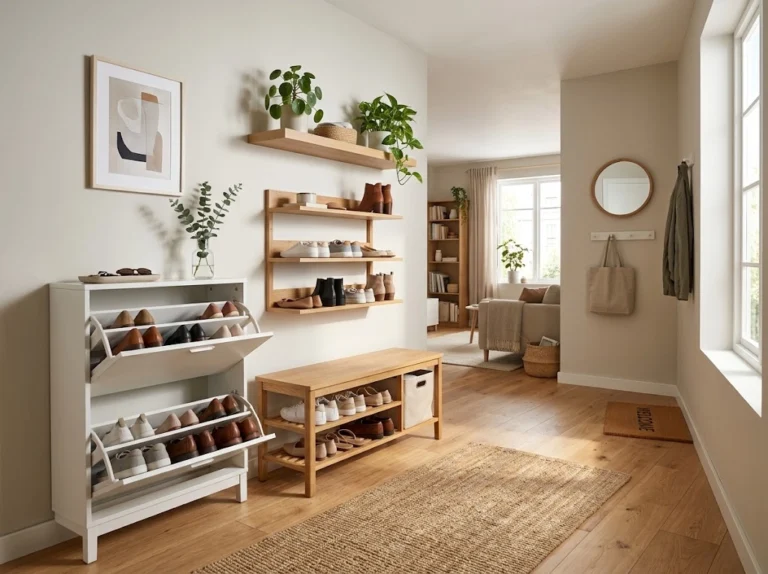
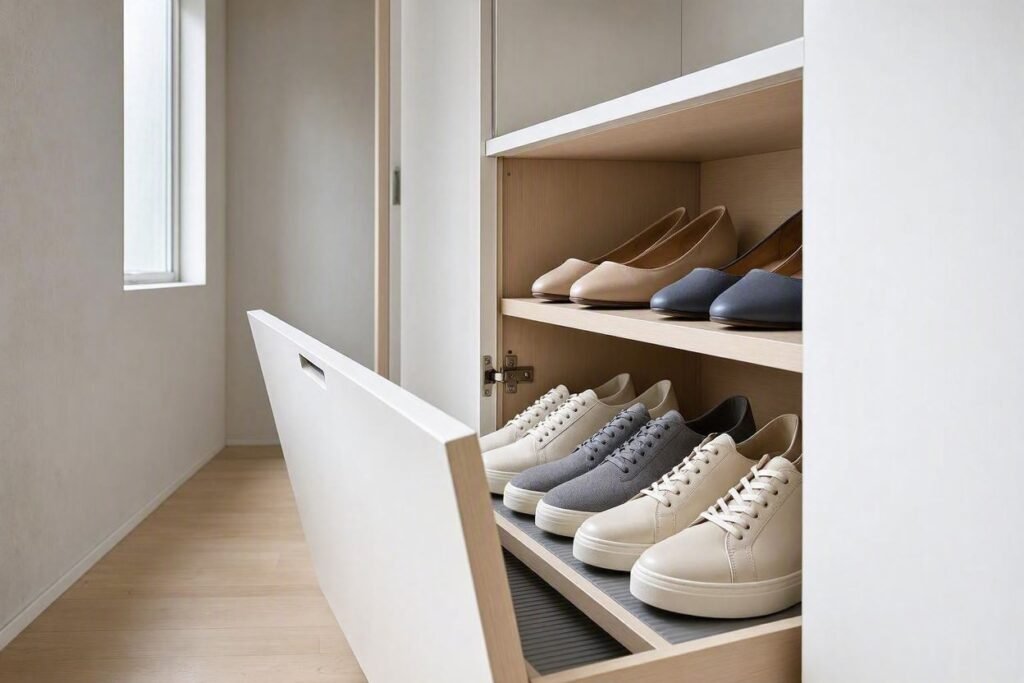
| Slim Tilt-Out Cabinet | Tiny entryways, narrow hallways | Hides the mess completely with a tiny footprint. Looks like a console table. | Can’t fit tall boots or chunky dad sneakers. | IKEA HEMNES, IKEA TRONES, simplehome |
| Open Tiered Rack | Fast daily access, tight budgets | The cheapest, easiest option. Great for airflow. | Looks messy instantly if you overfill it. | Amazon Basics, Ello Alain |
| Entry Bench with Cubbies | Families, small foyers | Double duty: seating to put shoes on + hidden storage below. | Cubbies fill up fast; requires discipline. | Threshold, Wayfair entry benches |
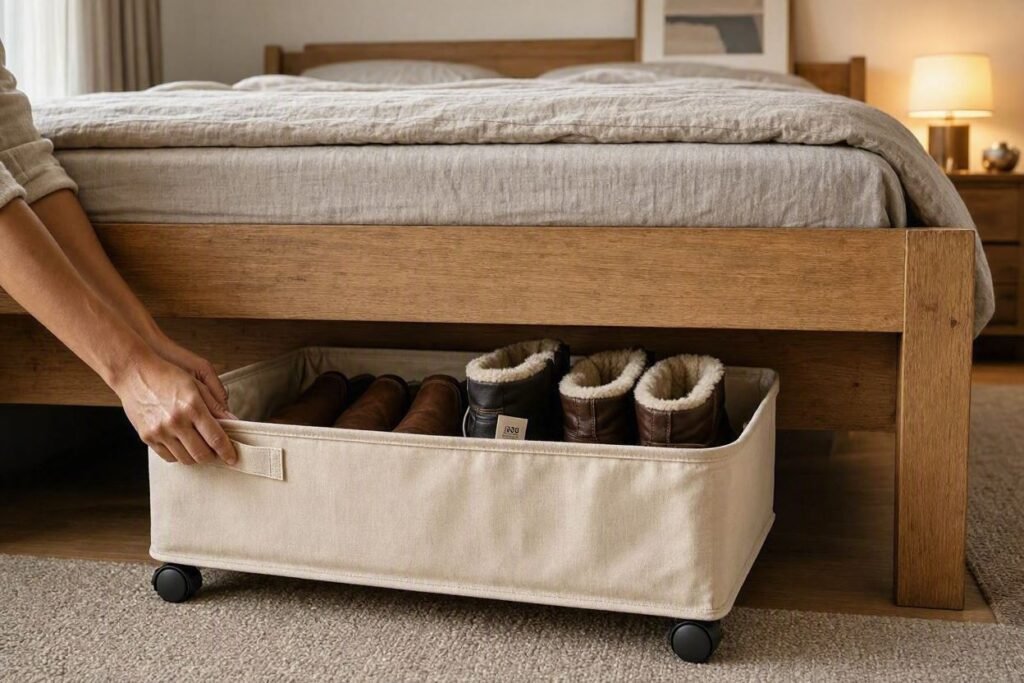
| Under-Bed Bins | Bedrooms, studio apartments | Utilizes “dead” space perfectly. Keeps shoes out of sight. | Dust control is a must; hard to access quickly. | The Container Store, IKEA SKUBB |
| Over-the-Door Organizer | Renters, tiny closets, dorms | Uses vertical space without drilling a single hole. | Only works well for lightweight, flat shoes. | Rev-A-Shelf, Household Essentials |
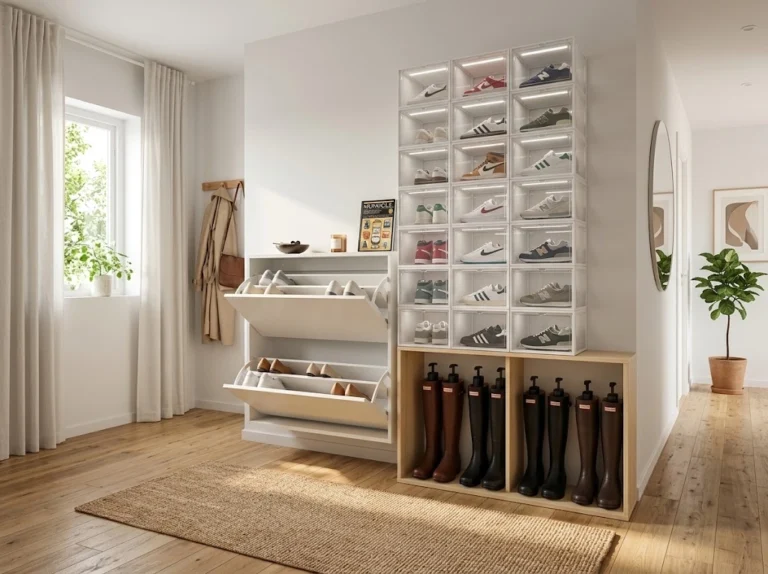
| Stackable Clear Boxes | Sneakerheads, formal shoes | Protects shoes from dust; highly visible. | Can look bulky and take up a lot of visual space. | IRIS USA, The Container Store |
Zone-by-Zone Execution
1. The Entryway: The “Two-Pair” Rule
The entryway is where shoe clutter feels the worst because it blocks movement. To fix this, enforce a strict rule: No more than 2 pairs of shoes per person in the entryway at any given time.
- Use a slim tilt-out cabinet (like the IKEA TRONES) to hide the daily shoes.
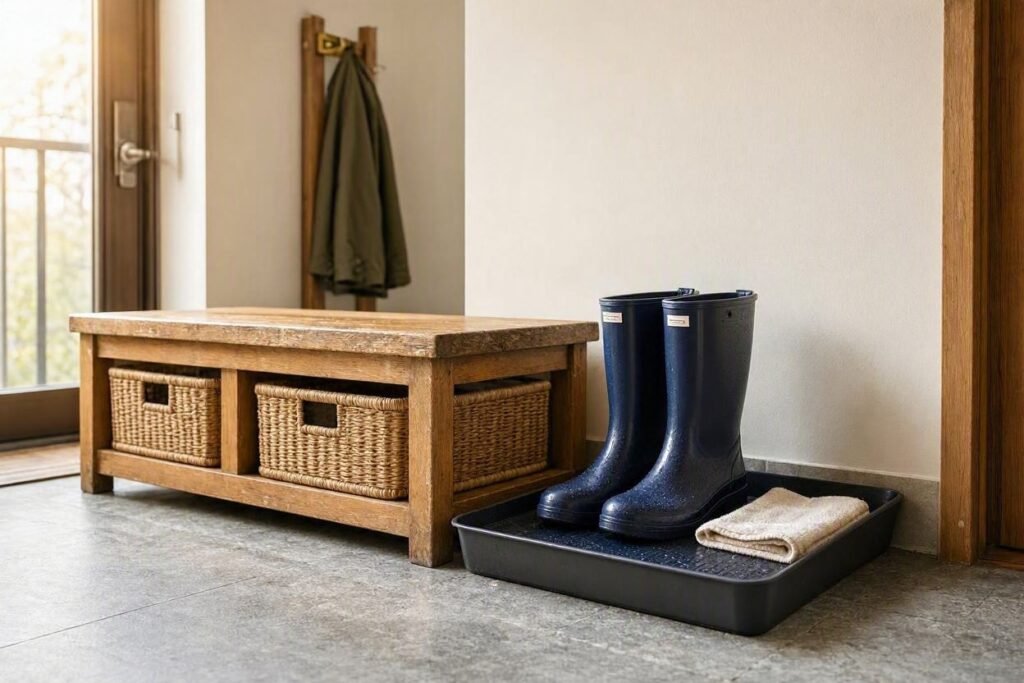
- If you live in a rainy/snowy climate, keep a stylish boot tray (like the The Buckle Guy tray) under the rack to catch water and mud so it doesn’t ruin your floors.
2. The Bedroom & Living Room: The “Hidden” Zones
If the entryway can’t hold your whole collection, move the overflow to spaces that blend into your home.
- Under the Bed: Use rolling, fabric bins with lids (like IKEA SKUBB) for off-season shoes.
- The Living Room Ottoman: Buy a storage ottoman (like those from Article or Burrow) and use it to store your “weekly rotation” shoes. It hides the clutter and gives you a place to put your feet up.
- The Boot Hack: If you store tall boots, they will eventually crack and slump. Pro tip: Cut up cheap pool noodles or use rolled-up magazines to stuff the shafts of the boots so they stand perfectly upright.
Maintenance (Keep Them Fresh)
A shoe storage system is useless if your entryway smells like a high school locker room. Small spaces trap odors, so you have to be proactive.
- The 30-Minute Air-Out: Never put sweaty gym shoes or wet rain boots directly into a closed cabinet. Let them air out on a balcony or by an open window for 30 minutes first.
- Odor Absorbers: Toss a cedar block, a activated charcoal bag (like Bamboo Charcoal), or even a tea bag filled with baking soda into your closed shoe cabinets.
- The Monthly Reset: Once a month, check your entryway. If someone has left their “weekly” shoes by the door, move them back to their proper hidden zone.