How to Store Clothes When You Don’t Have a Closet
We’ve all been there : the dreaded “chair” in the corner of the bedroom, slowly disappearing under a mountain of clothes. Living in a space without a built-in closet can feel overwhelming, but it doesn’t have to be a daily struggle.
Organizing a closet-free home isn’t just about hiding clutter; it’s about reclaiming your peace of mind and turning your room into a functional, boutique-style space. With a few strategic tweaks, you can create a seamless storage system that makes getting dressed a joy, not a chore.
Let’s build your invisible closet.
Phase 1: The Foundation (Assess and Edit)
Before you buy a single storage bin or garment rack, you need to understand your space and your wardrobe.
1. Measure Before You Buy
Don’t guess. Use a tape measure to map out your room’s dimensions.
- Floor space: Is there room for a freestanding rack without blocking your walkway?
- Wall space: How much vertical room do you have for shelves or pegboards?
- Under-bed clearance: Measure the exact height and width under your bed to ensure any bins you buy will actually fit and slide smoothly.
2. The Ruthless Edit
You cannot organize clutter. Gather every piece of clothing and sort it into three distinct categories:
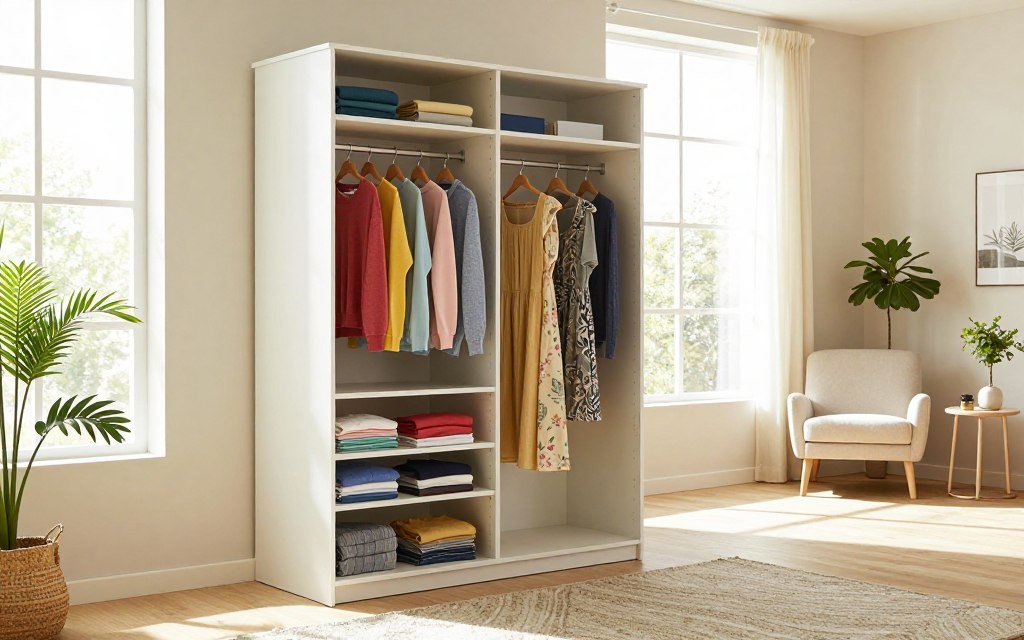
- Daily Essentials: Items you wear weekly (keep these highly accessible).
- Seasonal Gear: Off-season clothes, heavy coats, or holiday attire (store these out of the way).
- The Exit Pile: Items that are damaged, no longer fit, or haven’t been worn in a year. Donate, recycle, or repair them immediately.
Your Zoning Strategy
| Clothing Category | Storage Priority | Recommended Location |
|---|---|---|
| Daily Essentials | High | Freestanding rack, eye-level shelves, or top drawers. |
| Accessories | Medium | Wall hooks, pegboards, or over-the-door organizers. |
| Seasonal Gear | Low | Under-bed bins, high shelves, or inside luggage. |
| Special Occasion | Low | Breathable garment bags in a cool, dark corner. |
Phase 2: The Open Wardrobe (Everyday Essentials)
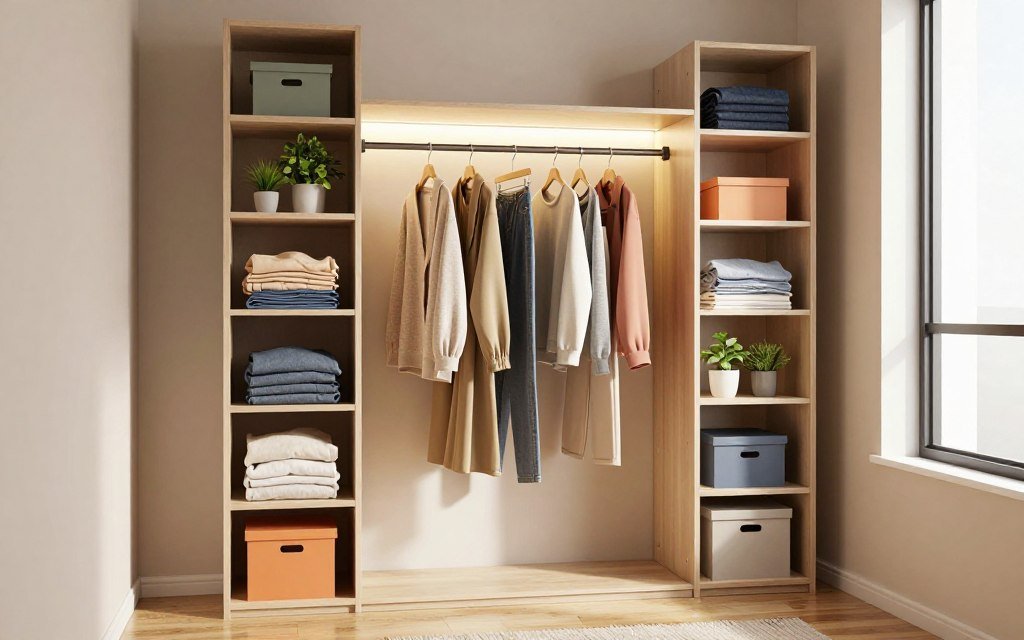
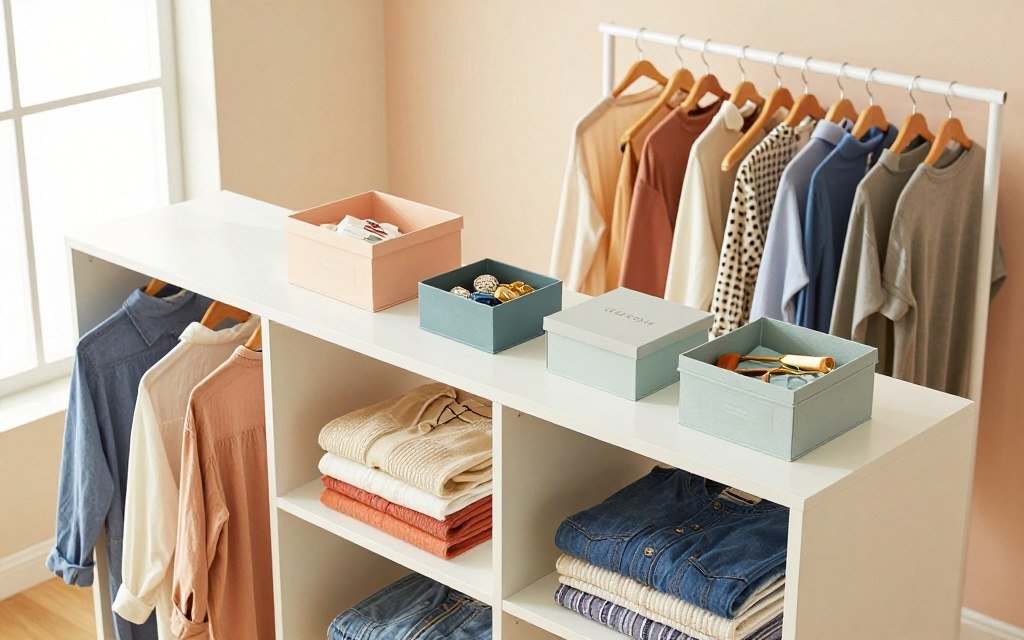
When you don’t have doors to hide your clothes, your storage becomes part of your room’s decor. The goal is to make it look intentional, not makeshift.
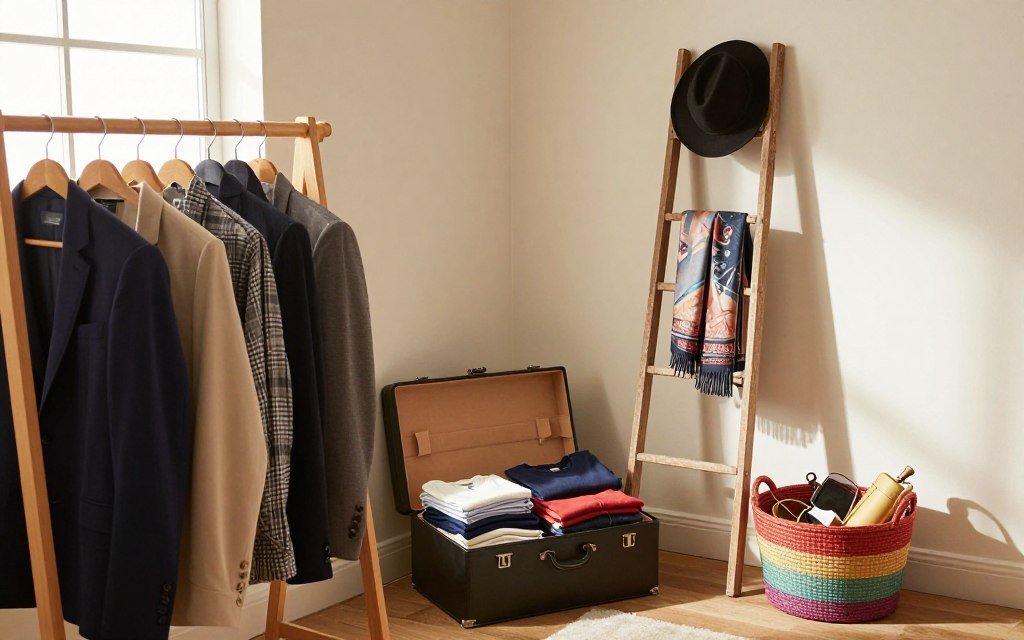
The Art of the Garment Rack
A flimsy rack will wobble and frustrate you. Invest in a heavy-duty, commercial-grade steel rack (like a Z-rack) with a high weight capacity.
- Pro Tip for Stability: Always hang your heaviest items (like denim jackets or winter coats) at the bottom or center of the rack to lower the center of gravity and prevent tipping.
- The Uniformity Hack: Swap out mismatched plastic hangers for slim, matching velvet or wooden hangers. This single change instantly makes an open rack look like a high-end retail display and doubles your hanging space.
Hijack Vertical Space
If floor space is tight, look up.
- Install a pegboard or a series of stylish wall hooks to hold hats, scarves, belts, and frequently worn bags.
- Use over-the-door organizers with clear pockets to corral socks, jewelry, or small accessories without drilling a single hole in your walls.
Phase 3: Hidden Storage (Seasonal and Bulk Items)
Your open rack should only hold your current, active wardrobe. Everything else needs a secure, out-of-sight home.
Master the Under-Bed Space
This is prime real estate for off-season clothing and extra bedding.
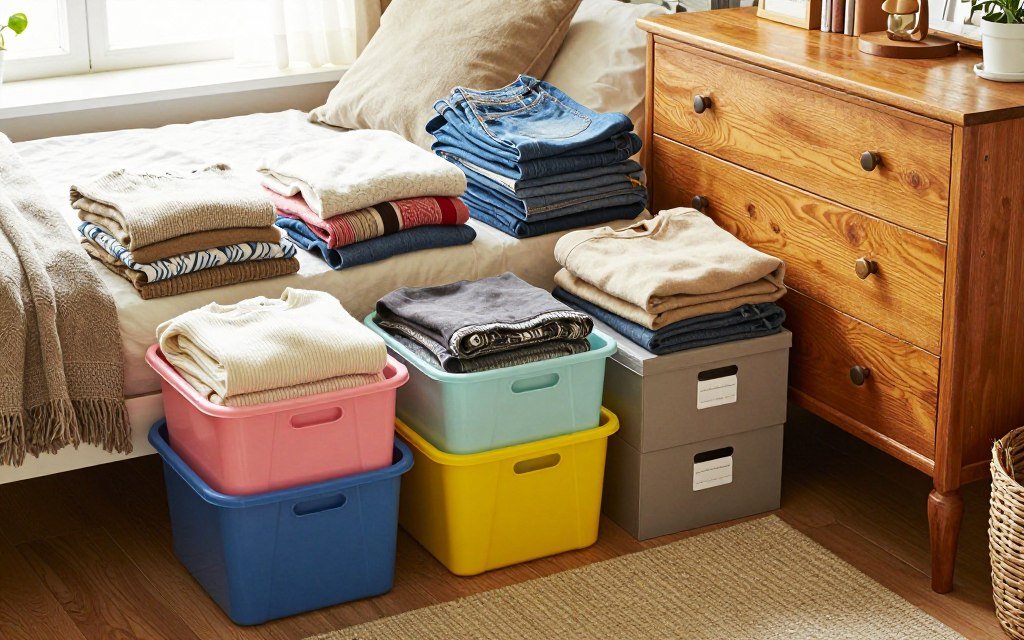
- Choose shallow, lidded containers with smooth-rolling wheels.
- Label both ends of the bins so you can identify the contents even when they are pushed deep under the bed.
Choose the Right Container for the Fabric
- Natural Fibers (Wool, Silk, Cotton): Always use breathable fabric or canvas bags. Natural fibers need to breathe; sealing them in plastic traps moisture and invites mildew.
- Durable Synthetics (Denim, Activewear): Clear, sealed plastic bins are fine here, as they keep moisture out and let you see the contents.
- Crucial Rule: Never pack clothes tightly. Fold them loosely to maintain their shape and allow for airflow.
Pest and Odor Control (The Natural Way)
Ditch the toxic, smelly mothballs. Instead, tuck natural cedar blocks, lavender sachets, or silica gel packets into your storage bins. They repel pests and keep your clothes smelling fresh without the chemical odor.
Phase 4: Design Illusions and Safety
You can make a small room feel larger and more polished with a few clever design tricks.
The “Curtain Trick”
If an open rack feels too exposed, install a ceiling-mounted tension rod and hang a beautiful, floor-length linen curtain in front of it. Pull it closed at night, and you instantly have a “closet” that adds a soft, elegant touch to your room.
Multi-Functional Furniture
Every piece of furniture in a small space must earn its keep.
- Choose a bed frame with built-in drawers.
- Use a stylish storage ottoman at the foot of the bed to hide bulky items like vacuum attachments or extra blankets.
Safety First
- Anchor Everything: Tall shelving units, dressers, and heavy garment racks must be anchored to wall studs to prevent tip-overs, especially in homes with children or pets.
Phase 5: The Maintenance Routine
A brilliant storage system will fail without a simple maintenance routine. Consistency is your best defense against clutter.
The Daily 2-Minute Reset
Make it a non-negotiable habit to return every item to its designated home immediately after use. Hang up tomorrow’s outfit tonight. Empty the “dreaded chair” before you go to sleep.
The Seasonal Swap
Twice a year (spring and fall), dedicate an hour to rotate your wardrobe.
- Wash everything before storing it. Body oils and invisible stains attract pests and turn yellow over time.
- Inspect items for repairs as you pack them away.
The “One-In, One-Out” Rule
To prevent your closet-free system from overflowing, adopt this mindset: for every new garment you bring into your home, one old item must be donated or recycled. This keeps your collection curated and manageable.
Frequently Asked Questions (FAQ)
How do I begin if my space is completely overwhelming?
Start small. Don’t try to organize the whole room in one day. Begin by measuring your space and tackling just one category (e.g., “today, I am only sorting my sweaters”). Set aside a donation bag first to immediately create breathing room.
What is the most stable way to use a freestanding garment rack?
Opt for a heavy-duty, commercial-grade steel rack. Place it against a wall (not in the middle of the room), hang heavy items at the bottom, and ensure the feet are wide and stable. If it still wobbles, consider a wall-mounted rail system anchored into studs.
How can I maximize storage in a studio apartment without it looking cluttered?
Visual consistency is your best friend. Use matching hangers, uniform storage bins, and a cohesive color palette. If open storage feels too chaotic, use a folding screen or a curtain to conceal the rack, turning it into a deliberate design feature rather than an eyesore.
What are the best containers for long-term storage?
For natural fibers like wool and cashmere, breathable canvas storage bags are essential to prevent moisture buildup. For durable items, clear, stackable plastic bins are excellent. Always ensure clothes are 100% clean and bone-dry before packing them away.
How do I protect my clothes from pests without using mothballs?
Use natural alternatives like cedar wood blocks, lavender sachets, or activated charcoal bags. Keep your storage areas cool, dry, and dark, and check on your stored items every few months to catch any issues early.
What can I do with shoes and accessories if I have zero floor space?
Look to the back of your doors. Over-the-door shoe organizers or 3M Command Hooks are perfect for hanging bags, scarves, and lightweight shoes. A slim, vertical shoe rack can also be tucked into narrow gaps beside a dresser or bed.
Final Thoughts
Living without a built-in closet isn’t a compromise; it’s an invitation to design a wardrobe system that perfectly fits your lifestyle. By measuring thoughtfully, editing ruthlessly, and using vertical space creatively, you can transform a challenging layout into a beautiful, highly functional space.
Start today by clearing off that chair. Small, consistent steps will lead to a calmer, more organized home that you’ll love living in.