How to Organize a Small Bathroom With Limited Cabinet Space
We’ve all been there. You’re running late, you reach for your moisturizer, and you knock over three half-empty bottles of shampoo in the process. The counter is a war zone, the cabinet under the sink is a dark, unreachable black hole, and you’re pretty sure you have three different tubes of toothpaste hiding in there somewhere.
When your bathroom lacks cabinet space, every square inch feels like a battlefield. But here’s the secret: you don’t need a contractor, a massive budget, or a magical expansion spell to fix it. You just need a system that works with your space, not against it.
Here is your practical, no-stress guide to reclaiming your tiny bathroom and turning it into a calm, highly functional retreat.
The Great Bathroom Purge (Before You Buy a Single Bin)
The biggest mistake people make is trying to organize clutter. You cannot neatly arrange things you don’t actually need. Before you buy a single plastic container, you need to hit the reset button.
1. The “Blank Slate” Method
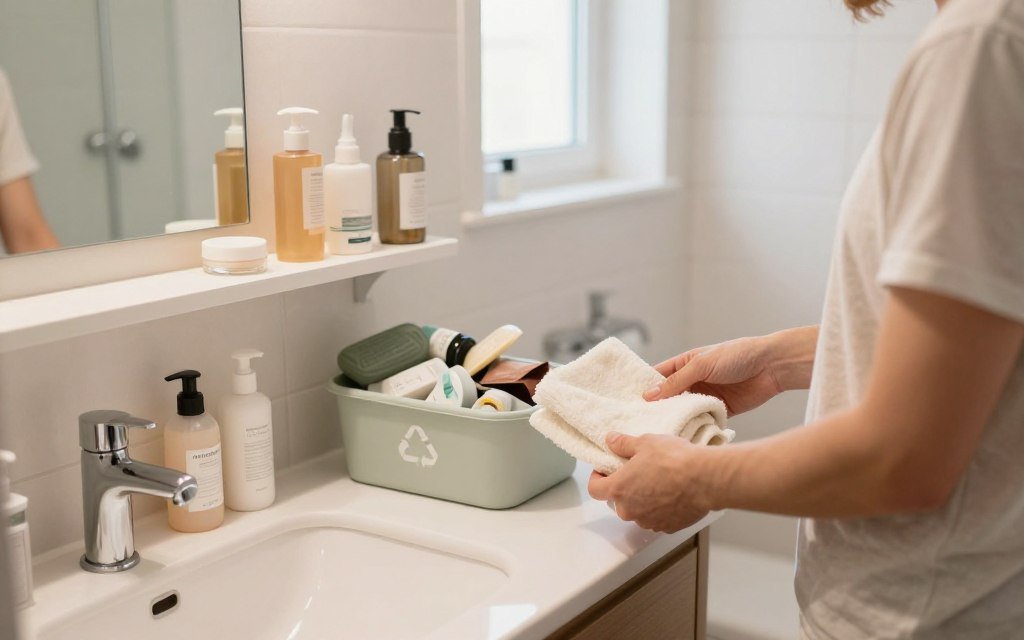
Take everything out. Every bottle, tube, and rag from the vanity, medicine cabinet, and shower. Lay it all out on your bed or the bathroom floor. It will look overwhelming for a minute, but this is the only way to see exactly what you own.
2. The Ruthless Sort
Grab four bags or boxes and sort everything into:
- Keep: Daily essentials you actually use.
- Relocate: Items that don’t belong in a humid bathroom (e.g., backup toilet paper, extra medications, bulky hair tools). Move these to a bedroom closet or hallway.
- Toss: Expired sunscreen, dried-out mascaras, leaking tubes, and empty bottles. (Be ruthless: if you haven’t touched it in six months, let it go).
- Donate: Unopened, gently used products you know you’ll never use.
3. Measure Twice, Buy Once
Now you can shop. But don’t guess. Use a tape measure to record the exact width, depth, and height of your cabinets, and the clearance between shelves. Buying a bin that is half an inch too wide is a special kind of frustration.
The “Zoning” Strategy (Because Everything Needs a Home)
Clutter happens when items don’t have a designated address. In a tiny bathroom, you can’t afford “drop zones” You need strict, functional zones based on where you actually stand when you use them.
- The Sink Zone: Toothbrush, daily skincare, hand soap. (Rule: Only things used while standing at the mirror get to live here).
- The Shower Zone: Shampoo, body wash, razor. (Rule: Only things used while wet).
- The Toilet Zone: Extra toilet paper, feminine hygiene products, wipes.
- The Backup Zone: Exactly one extra of each essential (one extra shampoo, one extra toothpaste). Store these in a single, labeled bin tucked away on a high shelf or in a hallway closet.
If an item doesn’t fit into one of these zones, it doesn’t belong in the bathroom. Period.
Hacking the Awkward Spaces
When you have no cabinets, you have to get creative. Floor space is a myth, we are building up, down, and sideways.
Taming the Under-Sink Black Hole
The space under the sink is tricky because of the plumbing, but it’s prime real estate.
- Ditch the loose bottles: Never throw bottles directly under the sink. They will roll into the back and be lost forever.
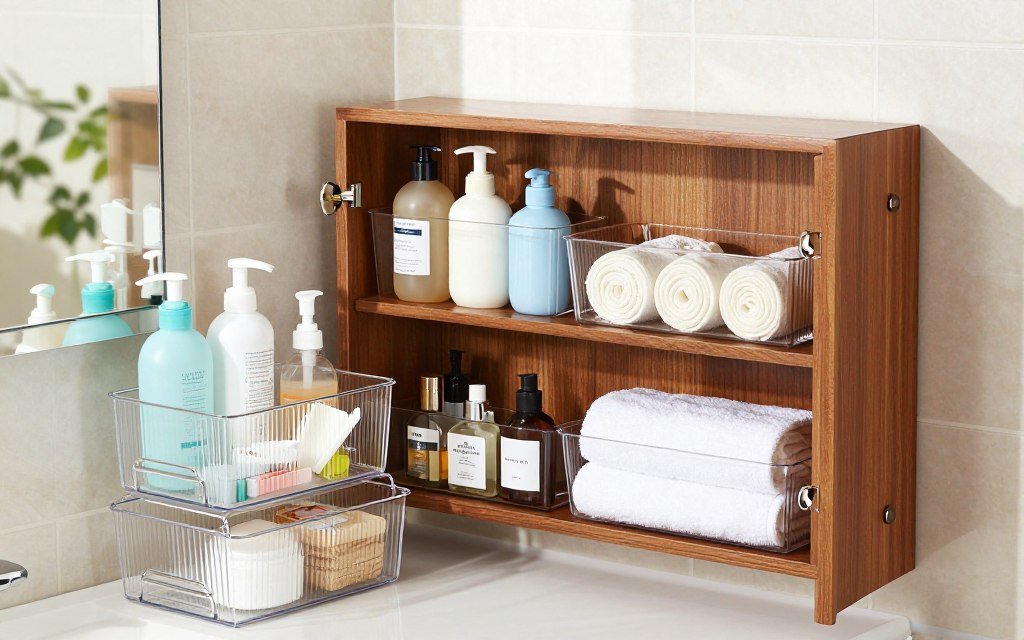
- Use U-Shaped Bins: These are specifically designed to fit around the P-trap plumbing, giving you usable shelf space where you thought there was none.
- Pull-Out Drawers: If your budget allows, install sliding baskets. They bring the items in the very back right to your fingertips, so you don’t have to crawl on the floor to find the toilet cleaner.
Mining Vertical Real Estate
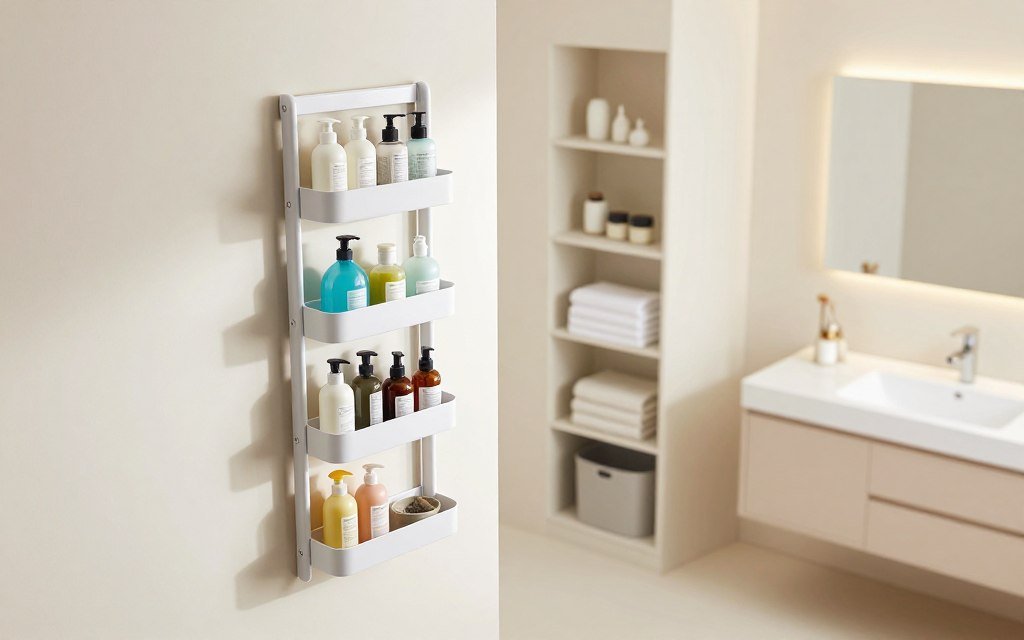
- Over-the-Toilet Shelving: This is the holy grail of small bathrooms. A freestanding wire or bamboo shelf turns dead air into premium storage for towels and your “Backup Zone” bin.
- Tension Pole Caddies: For the shower, these wedge tightly between the floor and ceiling in the corner. They hold a massive amount of bottles and require zero drilling (perfect for renters).
- The Back of the Door: Install an over-the-door rack with shallow pockets. It’s perfect for hair dryers, brushes, and extra toiletries. Crucial tip: Measure the gap between your door and the frame to ensure it still closes smoothly.
The Counter & Shared Space Rules
The “Intentional Counter” Rule
A small counter looks messy the second you put three items on it. The goal isn’t to make it completely empty (that’s not realistic), the goal is to make it intentional.
Keep only a nice pump for hand soap, a wall-mounted toothbrush holder (or one small tray), and maybe one daily moisturizer. Everything else goes into a drawer or on a shelf. Pro tip: Use a tray with a slight lip, and lift it entirely when you wipe down the counter to prevent gross soap buildup underneath.
Surviving a Shared Bathroom
If you share this space, chaos is inevitable unless you set boundaries.
- Assign Personal Caddies: Give each person their own small, labeled bin or hanging shower caddy for their specific products.
- The “One-In, One-Out” Rule: If someone buys a new body wash, the empty one must be tossed before the new one enters the shower.
Crucial Safety & Maintenance Reminders
- Chemical Safety: Always keep harsh cleaning chemicals sealed and separated from your daily skincare products. Store them on a low shelf or behind a child-proof latch if little ones are around. Never mix bleach with ammonia-based products, as it creates deadly toxic fumes.
- Humidity is the Enemy: Bathrooms warp wood and rust cheap metal. Choose organizers made of rust-resistant stainless steel, high-quality plastics, or moisture-treated bamboo.
- The 5-Minute Reset: Commit to a quick reset twice a week. Toss empty bottles, wipe the counter, and put stray items back in their bins. If this takes longer than 5 minutes, you have too much stuff in the room.
Quick FAQ: The Small Bathroom Cheat Sheet
How do I organize the awkward space under the sink with pipes in the way?
Use a U-shaped organizer designed to wrap around the plumbing. Pair it with sliding baskets (like those from Madesmart) to pull items forward, and use the odd gaps around the pipes for flexible items like sponges or microfiber cloths.
What specific measurements do I need before buying organizers?
Don’t just measure the width of the cabinet. Measure the depth (to ensure drawers can open), the height between shelves (for stackable units), and the clearance behind the door (for over-door racks).
How can I utilize vertical space if I have zero floor room left?
Look up. Install narrow floating shelves above the toilet or beside the mirror for daily essentials in attractive jars. Use heavy-duty, waterproof adhesive hooks (like Command brand) for robes and loofahs, ensuring you use the correct wall anchors for tile or drywall.
What are the most durable materials for bathroom storage?
Avoid cheap, untreated wood or low-grade metal. Opt for rust-resistant metals (like aluminum or stainless steel), high-quality plastics (like OXO or The Container Store brands), or sealed bamboo. They resist warping, mold, and corrosion.
How do I keep the countertop from looking like a cluttered mess?
Corral your absolute daily essentials (soap, lotion, toothbrush) onto a single, stylish tray. Use upright vanity organizers for cosmetics. Most importantly, lift the tray when you clean to prevent moisture and grime from building up underneath.